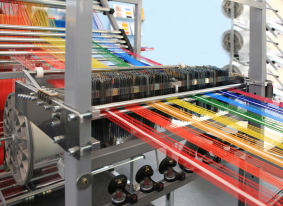



The National Economic Council (DEN) has revealed that 27 labor-intensive manufacturing companies from China and Vietnam ‒ mainly in footwear and garments ‒ are preparing to shift production to Java, particularly driven by import tariff disparities imposed by U.S. President Donald Trump on several major trading partners.
DEN member Mochammad Firman Hidayat said the policy shift has made Indonesia a more competitive production base. If the relocations materialize, they could generate around 120,000 new jobs in the country.
To illustrate the competitive gap, the U.S. currently applies reciprocal tariffs of around 19 percent on Indonesian goods, compared with 47 percent for China and 20 percent for Vietnam. This advantage is prompting investors to consider Java ‒ particularly Central Java ‒ as a promising destination.
“This is a relocation in the labor-intensive sector, footwear and garments. There are 27 factories planning to move to Java, especially Central Java because of tariff differences. This could create 120,000 jobs,” Firman said as quoted by Bisnis.com on Tuesday, November. 25, 2025.
However, Firman stressed the importance of faster licensing procedures and bureaucratic reforms to support ease of doing business. Investors are also calling for better local workforce readiness.
He noted that companies would require large numbers of sewing workers, while a majority of Central Java residents have traditionally worked in agriculture.
“So, they need time to train workers in Java so that productivity can increase, at least equivalent to Vietnam,” Firman added.
Industry shifts
The Indonesian Employers Association (Apindo) has long observed a trend of footwear and garment plants shifting from Banten and West Java to Central Java.
Apindo’s Head of Manufacturing Industry Division, Adhi Lukman, said this shift is influenced by cost structure, efficiency, and tighter global competition.
“In many labor-intensive sectors, especially footwear and garments, labor cost structure is crucial. Even a small increase can become a big burden for the industry,” Adhi said.
He added that Central Java continues to offer more moderate wage levels compared with traditional industrial hubs, leading companies to relocate part or all of their operations to maintain competitiveness.
Already have an account? Sign In
-
Start reading
Freemium
-
Monthly Subscription
20% OFF$29.75
$37.19/MonthCancel anytime
This offer is open to all new subscribers!
Subscribe now -
Yearly Subscription
33% OFF$228.13
$340.5/YearCancel anytime
This offer is open to all new subscribers!
Subscribe now
Set up email notifications for these topics