


The government has reiterated its commitment to restoring the Tesso Nilo National Park (TNTN) ecosystem despite recent public pressure and protests surrounding ongoing forest–area enforcement operations.
The Ministry of Forestry said the government remains firm in carrying out its mandate under Presidential Regulation No. 5/2025 on forest-area normalization.
Under the regulation, conservation areas such as TNTN must be returned to their original ecological functions once the state regains control of the land. This includes restoring the park as a protected natural area focused on ecological preservation, biodiversity protection and sustainable nature-based tourism.
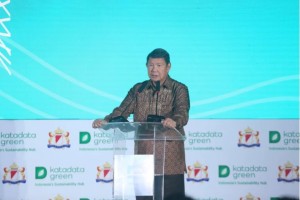
“Activities in the area are prioritized toward protection and safeguarding of the forest, conservation of biodiversity and the sustainable use of biological resources,” Forestry Ministry spokesman, Agus Yasin, spoke to Indonesia Business Post on Monday, November24, 2025.
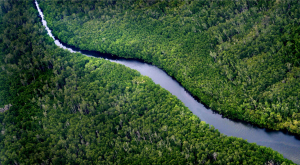
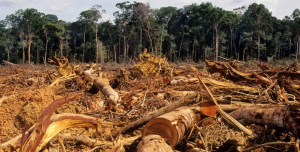
Tesso Nilo, one of Sumatra’s last lowland rainforests, has faced years of encroachment, illegal plantations and biodiversity loss. The government says the current enforcement and restoration drive marks a critical step toward reversing the long-standing degradation of the park.
Despite pressures and mass actions against forest-area enforcement, TNTN continues to be managed in accordance with the existing regulations.
Agus stressed that all enforcement activities follow legal procedures. Any structures or plantations built without permits inside forest zones are subject to administrative sanctions, legal action and eventual return of the land to the state so it can be restored to its designated function.
“Forest-area enforcement is not about intimidation. The Forest Protection Task Force [Satgas PKH] performs its duties based on the law,” he said.
Individuals are summoned for clarification before land handover to ensure that their farms or plots indeed fall within forest boundaries. If they refuse to hand over land that is proven to be inside the forest area, there will naturally be legal consequences.
Alternative schemes, such as forestry partnerships or concession arrangements, may be available for certain communities depending on the verification results.
Agus emphasized that the success of the restoration effort hinges on the commitment and consistency of all stakeholders involved in the Tesso Nilo National Park Ecosystem Recovery Acceleration Team (TP2ETNTN), which operates directly under the Riau governor.
The team consists of several working groups with clear mandates. The Land and Population Relocation Working Group is responsible for inventory, verification and validation of residents who must be relocated, followed by the preparation of replacement land outside TNTN.
The Reforestation Working Group prepares areas for replanting to restore forest cover. The Law Enforcement Working Group ensures that all measures are taken in line with existing regulations. Other working groups support these efforts in planning, coordination and implementation.
Agus underlined that synchronization and synergy among the groups are essential. “Effective and transparent coordination is crucial for TP2ETNTN to meet the restoration targets. Only then can the ecological recovery of Tesso Nilo proceed as intended,” he said.
Already have an account? Sign In
-
Start reading
Freemium
-
Monthly Subscription
20% OFF$29.75
$37.19/MonthCancel anytime
This offer is open to all new subscribers!
Subscribe now -
Yearly Subscription
33% OFF$228.13
$340.5/YearCancel anytime
This offer is open to all new subscribers!
Subscribe now
Set up email notifications for these topics