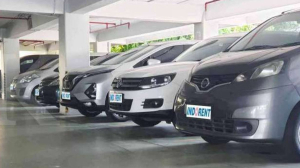



The Indonesian automotive industry is facing one of its toughest years in a decade as weakening consumer purchasing power continues to drag down vehicle sales, with the government pledging a new round of fiscal incentives aimed at stabilizing and reviving the industry, which has strategic role in the country’s economy.
Data from the Association of Indonesian Automotive Manufacturers (Gaikindo) show that car sales in the first 10 months of the year reached only around 635,000 units, down roughly 10 percent from the same period last year. The figure remains far off the industry’s full year target of 900,000 units.
To meet the target, automakers would need to sell an additional 264,000 units, or about 132,000 units per month for the remainder of the year, a pace industry players say is increasingly unrealistic under current market conditions.
To counter the declining trend, the government is preparing fiscal incentives for the automotive sector, which will be included in the 2026 national fiscal policy package. The Industry Ministry is finalizing the proposal before submitting it to the Coordinating Economic Ministry.
Minister of Industry, Agus Gumiwang Kartasasmita, said the measure is intended to accelerate the sector’s recovery amid weak domestic demand and global market volatility.
“We see the automotive sector as too important to ignore,” Agus said as quoted in a statement on Monday, November 17, 2025.
“Its multiplier effect is significant, with strong backward and forward linkages to other sectors of the economy and substantial employment. Therefore, we have decided to propose incentives for the sector, similar to the automotive stimulus during the Covid-19 period,” he added.
The ministry is designing an incentive structure that targets both the demand side to stimulate purchases and the supply side, to ensure production utilization and protect industrial investment.
“Industry Ministry is in the process of finalizing proposals to be submitted to the government through the Coordinating Economic Minister. We are preparing incentive and stimulus policies for the automotive sector as part of the 2026 fiscal framework,” Agus said.
He cited that the primary focus of the proposed incentives is workforce protection and job creation within the automotive supply chain, while also ensuring long-term industrial sustainability.
“Our hope is that the automotive sector receives special attention, so existing jobs can be protected and new ones created,” he said.
“At the very least, through the 2026 fiscal policy, the sector can grow much faster and contribute more significantly to manufacturing and national economic growth,” he concluded.
Already have an account? Sign In
-
Start reading
Freemium
-
Monthly Subscription
20% OFF$29.75
$37.19/MonthCancel anytime
This offer is open to all new subscribers!
Subscribe now -
Yearly Subscription
33% OFF$228.13
$340.5/YearCancel anytime
This offer is open to all new subscribers!
Subscribe now
Set up email notifications for these topics