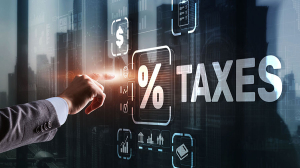


The Finance Ministry has planned to integrate data from taxpayers, fee payers, and customs and excise service users into a unified single profile database, marking a major step in its strategy to strengthen state revenue collection.
The initiative is outlined in Minister of Finance Regulation (PMK) No. 70/2025 on the Ministry’s 2025–2029 Strategic Plan , which emphasizes digital integration and data-driven fiscal reform as pillars of Indonesia’s medium-term fiscal policy.
“The direction of revenue intensification and extensification will be carried out through the integration of state revenue databases across finance ministry units and other ministries through a single profile of taxpayers, fee payers, and customs and excise service users,” the regulation states.
The Finance Ministry’s five-year roadmap aims to accelerate structural reforms essential for Indonesia’s long-term vision of becoming a high-income nation by 2045. To achieve this, the government targets optimizing both tax and non-tax revenues under the principle of “collecting more.”
Under the 2025–2029 plan, the government expects state revenue to reach between 12.86 percent and 18 percentof GDP by 2029, with tax revenue alone projected at 11.52 percent to 15 percent of GDP.
The strategic directions include regulatory and business process reform, data and service transformation, as well as tighter supervision and improved taxpayer compliance.
Coordinated data management
The Directorate General of Taxes (DJP) at the Finance Ministry has expressed its full support for the single profile initiative. DJP Director of Counseling, Services, and Public Relations, Rosmauli, said the agency’s databases already align with the requirements for the integrated system.
“For the purpose of building the single profile, the data needed from DJP will correspond to the profile being developed,” Rosmauli said on Wednesday, November 12, 2025.
According to the plan, the Finance Ministry’s Agency for Financial Technology, Information, and Intelligence (BTIIK) will coordinate the integration process across units responsible for taxation, customs and excise, and non-tax state revenues (PNBP).
The ministry’s reform agenda also highlights challenges in taxpayer compliance and trade practices. Recent findings show some taxpayers have been allowed to pay tax assessments in installments without prior approval or collateral. In parallel, authorities are intensifying efforts to combat underinvoicing in imported goods − a practice that continues to erode customs revenues.
Through these initiatives, the Finance Ministry seeks to enhance transparency, improve compliance, and maximize the effectiveness of fiscal policy implementation in the years leading up to 2029.
Already have an account? Sign In
-
Start reading
Freemium
-
Monthly Subscription
20% OFF$29.75
$37.19/MonthCancel anytime
This offer is open to all new subscribers!
Subscribe now -
Yearly Subscription
33% OFF$228.13
$340.5/YearCancel anytime
This offer is open to all new subscribers!
Subscribe now
Set up email notifications for these topics