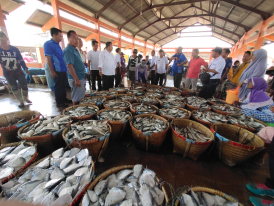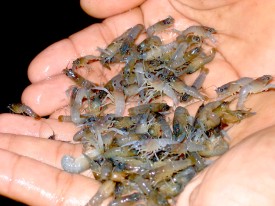


The Ministry of Marine Affairs and Fisheries (KKP) will establish four laboratories for radioactive substance testing by the end of 2025, following the inclusion of 41 Indonesian shrimp producers on the U.S. government’s yellow list after traces of radioactive materials were found in local shrimp sold in the U.S. market in July 2025.
Head of KKP’s Quality Agency, Ishartini, said that companies on the yellow list must obtain a radioactive-free certification issued by the KKP in order to export to the United States.
“We have already ordered radioactive testing equipment for our laboratory in Cilangkap, East Jakarta, which is expected to be operational by the end of this year,” she said in Jakarta on Thursday, November 6, 2025.
In addition to Cilangkap, the other three radionuclide testing labs will be located in Surabaya (East Java), Makassar (South Sulawesi), and Medan (North Sumatra). Ishartini did not disclose the budget allocation for the construction of these testing facilities, which will continue into next year.
The laboratory development plan follows discussions between the Indonesian government and the U.S. Food and Drug Administration (FDA). According to Ishartini, the FDA officially designated the KKP on October 9, 2025, as the authorized agency to issue radioactive-free certificates for shrimp exported to the U.S.
She emphasized that building the laboratories is crucial to achieving Indonesia’s 2025 fishery export target of US$6.25 billion (Rp104 trillion). As of September 2025, the country’s total fishery exports reached US$4.52 billion, with shrimp contributing around 30 percent or US$1.39 billion. Shrimp exports to the U.S. accounted for US$881.27 million, nearly 20 percent of total fishery exports.
“If Indonesian shrimp can re-enter the U.S. market, it will also make sales to other countries easier,” Ishartini said.
According to data from Statistics Indonesia (BPS), 240.54 tons of shrimp were returned by importing countries as of September 2025 − with 152.32 tons coming from the U.S. The total value of returned shrimp shipments reached US$2.09 million (Rp34.8 billion), including US$1.26 million from the U.S.
Ishartini noted that the incident stemmed from the discovery of Cesium-137 (Cs-137) radioactive contamination in shrimp products originating from the Modern Cikande Industrial Estate in Serang Regency, Banten.
Already have an account? Sign In
-
Start reading
Freemium
-
Monthly Subscription
20% OFF$29.75
$37.19/MonthCancel anytime
This offer is open to all new subscribers!
Subscribe now -
Yearly Subscription
33% OFF$228.13
$340.5/YearCancel anytime
This offer is open to all new subscribers!
Subscribe now
Set up email notifications for these topics