

Indonesia’s booming nickel industry, a key pillar in the country’s downstreaming agenda, has drawn scrutiny over mounting workplace accidents, pollution, and weak safety standards, amid calls from civil society for stronger oversight and regulatory reform.
Environmental and energy watchdog, Aksi Ekologi dan Emansipasi Rakyat or People's Ecological Action and Emancipation (AEER), held a public discussion on Monday, November 3, 2025, bringing together representatives from labor unions, the Ministry of Manpower, and the Ministry of Industry.
While the industry generated Rp127 trillion (US$8 billion) in export value in 2024, or about 3 percent of Indonesia’s total exports, AEER noted that this economic gain has come at a steep social and environmental cost. The group warned that the lack of safeguards for occupational health, worker safety, and environmental protection has created a serious K3L (Occupational Safety Health and Environment) crisis.
Hugo Nainggolan, a senior labor inspector at the Ministry of Manpower, reported that between 2019 and 2025, at least 104 work-related accidents occurred in the nickel sector, resulting in 107 deaths and 105 injuries.
He attributed the high rate of accidents to poor enforcement, inadequate equipment, and weak safety protocols.
“The ministry has launched a digital platform, Lapor Menaker, to allow the public and workers to confidentially report violations, enabling faster government response,” Hugo said.
The ministry currently employs around 1,400 labor inspectors across 38 provinces, though it remains unclear how many specifically monitor safety standards in nickel smelters.
On the same occasion, RR Sri Gadis Pari Bekti, a policy analyst at the Center for Green Industry, the Ministry of Industry, emphasized that the government’s push for green industry certification requires firms to meet standards not only on decarbonization, but also on corporate social responsibility and workplace safety.
“Safety and health management are part of the mandatory criteria for companies seeking green industry certification,” she said.
However, AEER researcher Riski Saputra warned that new threats are emerging from hazardous tailings waste produced by High Pressure Acid Leaching (HPAL) nickel processing.
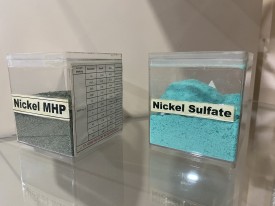
“The use of dry stack tailing systems poses landslide risks, especially in regions with high rainfall and seismic activity,” Riski said, noting that projected waste volumes could reach 78 million tons per year as production of Mixed Hydroxide Precipitate (MHP) expands.
He urged the government to establish national K3L standards for HPAL waste management and create a cross-sectoral tailings monitoring agency to protect workers and nearby residents.
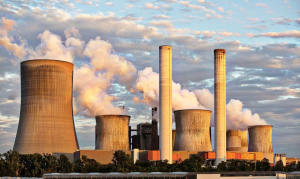
Riski also highlighted air pollution from coal-fired power plants (captive PLTUs) that supply energy to smelters. In Central Sulawesi’s Morowali regency, home to one of Indonesia’s largest industrial parks, cases of acute respiratory infections (ISPA) surged from 20,508 in 2021 to 80,713 in 2024, alongside increases in skin diseases and declining fish catches that hurt local livelihoods.
The Confederation of Indonesian Trade Unions (KPBI) argued that Indonesia’s Occupational Safety Law (Law No. 1/1970) is outdated and no longer relevant to modern industrial realities. The Ministry of Manpower confirmed that revisions are underway, but gave no timeline for completion.
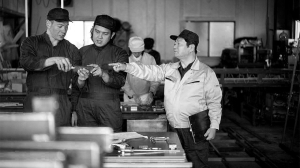
On-the-ground testimony from workers painted a bleak picture. Hendra, a representative of the Federation of Independent Industrial Workers (FSPIM) at the Indonesia Morowali Industrial Park (IMIP), said that “high workloads, long hours, and lack of supervision” put workers at constant risk.
“Many accidents are blamed on workers, even though the facilities and safety procedures are inadequate,” he said.
Hendra also highlighted gender-specific challenges faced by female workers, including lack of restroom facilities, which often forces them to delay urination, leading to urinary tract infections (UTIs). He further noted that sexual harassment in the workplace remains a persistent issue that receives little institutional attention.
Pius Ginting, AEER coordinator, called on both the government and nickel-importing nations to uphold strict Environmental, Social, and Governance (ESG) standards throughout the global nickel supply chain.
“Global energy transition must not come at the cost of workers’ rights, community safety, or environmental sustainability in Indonesia,” Pius said.
Already have an account? Sign In
-
Start reading
Freemium
-
Monthly Subscription
20% OFF$29.75
$37.19/MonthCancel anytime
This offer is open to all new subscribers!
Subscribe now -
Yearly Subscription
33% OFF$228.13
$340.5/YearCancel anytime
This offer is open to all new subscribers!
Subscribe now
Set up email notifications for these topics