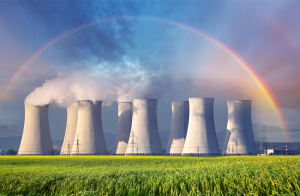



The Ministry of Energy and Mineral Resources (ESDM) is considering nuclear power as a strategic component in the country’s transition to Net Zero Emissions (NZE) by 2060, with nuclear energy being viewed as a critical solution to ensure reliable national electricity supply while supporting decarbonization of the power sector.
“Nuclear power is one of the strategic options in the national energy transition roadmap toward Net Zero Emissions 2060. It is no longer considered a last-resort option, but an integral part of national energy planning,” Yuliot Tanjung, Deputy ESDM Minister, said during the Nuclear Energy Regulatory Agency (BAPETEN) Executive Meeting and 2025 BAPETEN Award ceremony in Jakarta on Monday, October 27, 2025.
Yuliot noted that Indonesia has been exploring nuclear energy since the 1960s, marked by the construction of three research reactors: Triga Reactor in Bandung (2 MW), Kartini Reactor in Yogyakarta (100 kW), and Serpong Reactor in South Tangerang (30 MW).
He emphasized that Indonesia already has a strong legal framework for nuclear energy development, including Law No. 10/1967 on Nuclear Energy, the 2025–2045 National Long-Term Development Plan (RPJPN), and Government Regulation No. 40/2025 on National Energy Policy. According to PP No. 45/2025, nuclear power is now formally recognized as a core part of national energy planning rather than a fallback option.
“These documents reaffirm Indonesia’s commitment to operate its first nuclear power plant by 2032 and reach a total capacity of 44 GW by 2060,” Yuliot said.
Of the planned 44 GW, approximately 35 GW will serve public electricity needs, while 9 GW will support national hydrogen production. Under the national energy policy, nuclear energy’s share in the energy mix is projected to reach 5 percent by 2030 and 11 percent by 2060.
Despite the ambitious plan, the development of nuclear power faces challenges, particularly regarding financing and construction time. Building a single nuclear power plant is estimated to cost US$3.8 billion (Rp63.1 trillion) with a construction period of 4–5 years.
Safety however remains a top priority, and Yuliot stressed that the government will implement strict supervision and high-risk mitigation standards to ensure safe operations, particularly given Indonesia’s vulnerability to natural disasters.
Already have an account? Sign In
-
Start reading
Freemium
-
Monthly Subscription
20% OFF$29.75
$37.19/MonthCancel anytime
This offer is open to all new subscribers!
Subscribe now -
Yearly Subscription
33% OFF$228.13
$340.5/YearCancel anytime
This offer is open to all new subscribers!
Subscribe now
Set up email notifications for these topics