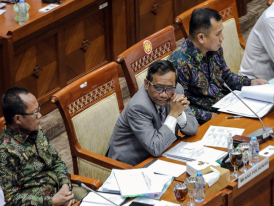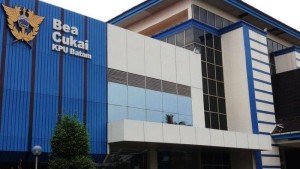


Finance Minister Purbaya Yudhi Sadewa has conducted another surprise inspection at the Customs and Excise Directorate General (DJBC) as part of his plan to transform the National Single Window Agency (LNSW) into an information technology-based trade intelligence center to enhance oversight of export and import activities.
Purbaya said the move aims to optimize Customs office’smonitoring systems so they can detect potential violations such as under-invoicing or inflated import values.
“I wanted to see how advanced Customs’ system really is whether I can optimize it to address what the President criticized about under-invoicing,” Purbaya told reporters at the Finance Ministry headquarters on Wednesday, October 22, 2025, after visiting the Customs office.
AI to enable real-time monitoring
The minister acknowledged that Customs’ existing system was already “quite good,” but emphasized the need to strengthen it with artificial intelligence (AI) to enable real-time monitoring of shipments and trade irregularities.
“It’s actually good enough, but not yet at the level where I can monitor vessels online and detect under-invoicing in real time. It’s not there yet because the AI system hasn’t been developed,” he said.
Purbaya expects the AI development process at Customs directorate general to be completed within three months. The initiative aligns with the establishment of the LNSW as a trade think tank, which will focus on advanced data analytics and early detection of potential trade leakages.
“We have about 20 experts there, including mathematicians, who will analyze potential trade discrepancies and leakages,” he added.
In addition to tightening digital oversight, Purbaya highlighted the ministry’s focus on tackling illegal imports, particularly used clothing (balpres), which has harmed domestic textile producers and small businesses.
“So far, we’ve only destroyed the goods and jailed the importers. The state gets nothing ‒ no fines, just extra costs to destroy the items and feed the inmates,” he said.
The minister stressed that stronger enforcement must not only deter violations but also revitalize local small and medium-sized enterprises (SMEs) in the textile industry.
“We want to revive our local textile producers,” Purbaya said.
The planned transformation of the LNSW into an AI-driven trade intelligence hub is seen as part of the Finance Ministry’s broader reform to modernize and digitize trade supervision.
By integrating data across government agencies and employing predictive analytics, the initiative is expected to strengthen transparency, efficiency, and integrity in Indonesia’s trade system, while also helping to plug revenue leakages and support the government’s investment agenda.
Already have an account? Sign In
-
Start reading
Freemium
-
Monthly Subscription
20% OFF$29.75
$37.19/MonthCancel anytime
This offer is open to all new subscribers!
Subscribe now -
Yearly Subscription
33% OFF$228.13
$340.5/YearCancel anytime
This offer is open to all new subscribers!
Subscribe now
Set up email notifications for these topics