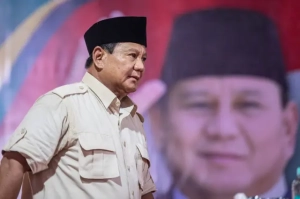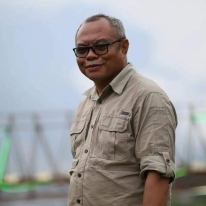



As the administration of President Prabowo Subianto and Vice President Gibran Rakabuming Raka marks its first year in office, the government has touted a string of accomplishments, but economists warn that structural and fiscal headwinds continue to cloud Indonesia’s path toward its ambitious 8 percent growth target.
Cabinet Secretary Teddy Indra Wijaya said the government had made “tangible progress” through programs that directly touch people’s lives. “There have been many achievements. Tomorrow’s plenary cabinet meeting will see the President present what we’ve achieved and what the people have felt,” Teddy said on Sunday, October 19, 2025.
Among the administration’s flagship initiatives is the disbursement of Rp30 trillion (US$12 billion) in direct cash assistance (BLT) to 35.4 million low-income households, covering an estimated 140 million Indonesians. According to Teddy, the funds were reallocated from budget efficiencies achieved earlier in the year.
“This is from early budget optimization, reallocating funds from programs that were not yet urgent to those that directly support the people,” he said.
Growth stagnates
Despite the government’s optimism, Indonesia’s economy has remained stagnant at around 4–5 percent growth in recent quarters. Key signature programs, including the free nutritious meal initiative, the Red-and-White Village Cooperatives, and food security drives, have yet to show measurable macroeconomic impact.
Meanwhile, the country faces ongoing deindustrialization, with manufacturing’s contribution to GDP stuck at around 18–19 percent. Job losses have mounted, with the Manpower Ministry reporting 44,333 layoffs as of August 2025. Around one million university graduates remain unemployed.
Investment-led growth also appears uneven. Data from the Ministry of Investment and Downstreaming show that Rp491.4 trillion in realized investment during the third quarter of 2025 created only 696,478 jobs, meaning that each job now requires Rp705.7 million in investment, up from Rp663.6 million a year earlier.
This trend, analysts say, reflects a slowdown in the quality of investment and its ability to generate employment. Foreign investment projects, for instance, absorbed only 246,400 workers in the third quarter (Q3) of 2025, compared to 269,800 in the same period last year.
On the fiscal side, the government’s balancing act remains fragile. Although the deficit is still within the 2.78 percent target, this stability is partly due to weak spending rather than strong revenue performance.
Data from the Finance Ministry shows state budget absorption at only 64.3 percent as of September, with central government spending lagging at 59.7 percent.
Several key ministries have underperformed in budget execution, notably the National Nutrition Agency (BGN) at 16.9 percent and the Agriculture Ministry at 32.8 percent, both critical to Prabowo’s food and nutrition programs.
Tax revenues are also under pressure, with collections reaching only 62.4 percent of the annual target by September, or Rp1.295 trillion out of Rp2.076 trillion projected in the 2025 budget. Economists fear this shortfall could widen, forcing the government to take aggressive measures that risk dampening economic activity.
Structural reform
Economist at the Institute for Economic and Social Research at the University of Indonesia (LPEM FEB UI), Teuku Riefky, said the government’s macroeconomic performance “remains weak,” adding that the current 5 percent growth rate is already difficult to sustain without more effective fiscal spending.
“There’s still misallocation of fiscal resources spending that doesn’t translate into productivity gains. The government must improve institutional quality to ensure spending truly boosts economic capacity,” Riefky told Indonesia Business Post on Sunday, October 19, 2025.
Segara Research Institute’s Executive Director, Piter Abdullah, added that job creation remains Indonesia’s most pressing challenge. “While household consumption shows signs of recovery, job indicators continue to deteriorate. Labor participation is falling, and optimism about job availability is the lowest among consumer confidence indicators,” he said as quoted by Bisnis Indonesia on October 18, 2025.
Despite the concerns, President Prabowo remains upbeat. Speaking at a university event in Bandung ahead of the anniversary, he said he stood “confident before the Indonesian people,” believing his administration had delivered on its promises.
Since taking office in October 2024, Prabowo has launched four stimulus packages totaling over Rp100 trillion, combining cash aid, tax relief, and public works programs to support consumption and employment.
As the government prepares for the second year in office, all eyes will be on whether Prabowo can turn these programs into sustainable growth, or whether the weight of fiscal, structural, and employment challenges will continue to slow Indonesia’s economic momentum.
When Prabowo Subianto took office a year ago, Indonesia braced for a presidency defined by big ambition, fiery nationalism, and uncompromising discipline. Twelve months later, his administration has indeed lived up to that reputation, a blend of muscular diplomacy, populist social policy, and assertive governance that has made Indonesia’s political tempo feel more intense than at any time in the post-Soeharto era.
From State Palace to the global stage, Prabowo’s leadership has been unmistakably hands-on. His political style, energetic, symbolic, and deeply personal, has recast Indonesia’s image abroad and reshaped domestic policy priorities at home.
Foreign policy
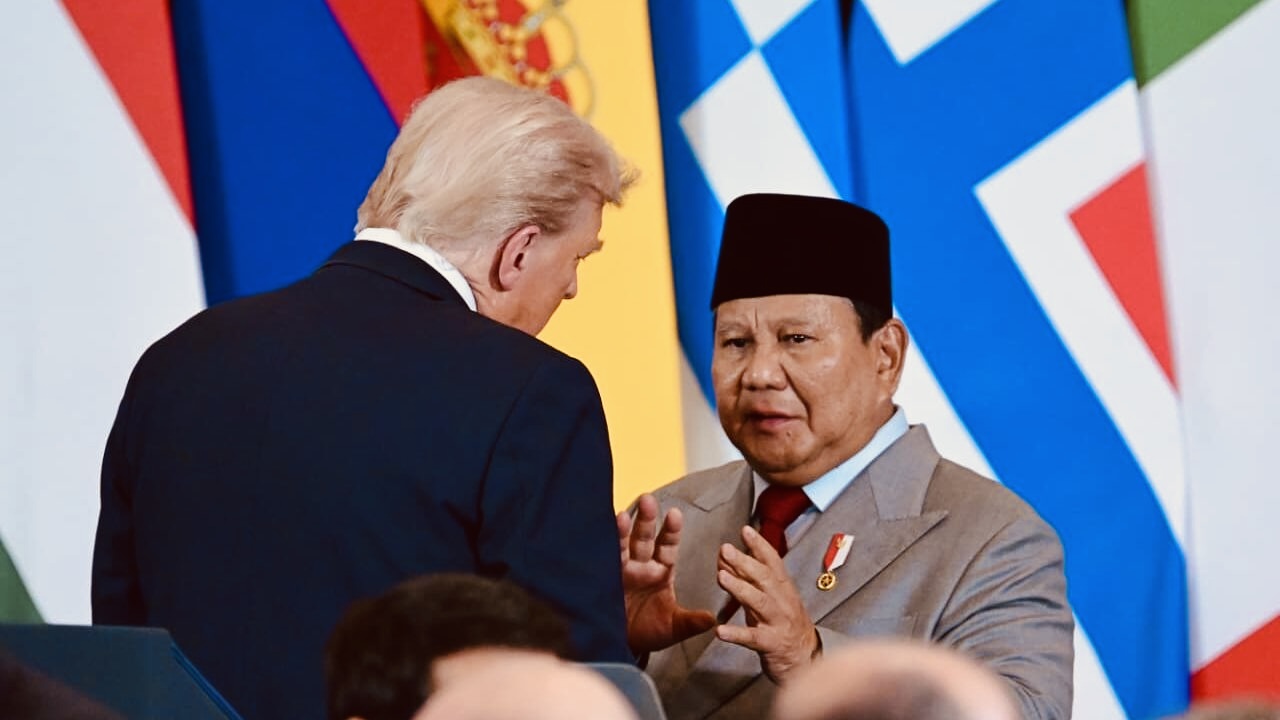
Indonesia’s foreign policy under Prabowo has taken a sharp turn toward what analysts describe as “hyperactive presidential diplomacy.” Compared with his predecessor Joko “Jokowi” Widodo, who focused on economic diplomacy and quiet pragmatism, Prabowo has preferred the bold and visible route.
In less than a year, he has met with world leaders across continents and taken Indonesia into BRICS, the economic bloc originally formed by Brazil, Russia, India, China, and South Africa. The move avoided by two previous presidents was both controversial and strategic.
While critics feared a tilt away from the West, Prabowo argued that joining BRICS was part of an “omnidirectional diplomacy,” allowing Indonesia to engage with all global powers, including the OECD, which Indonesia is also seeking to join.
“Indonesia must be everywhere in the North, in the South, in all platforms,” Prabowo said during a cabinet briefing earlier this year.
“A thousand friends are too few, one enemy too many,” he added.
The twin pursuits of OECD and BRICS membership reflect Indonesia’s effort to straddle both worlds: the developing South and the industrialized North. The former offers alternative financing and solidarity, while the latter provides governance benchmarks and access to high-income markets.
In one year, Prabowo has managed to shift perceptions, from a fiery ex-general with a nationalist streak to a president carving out a more global, pragmatic image. His transformation is perhaps most visible in his relationship with China.
Once a vocal critic of Beijing’s influence, Prabowo’s first official visit as president was to China, signaling a recalibration of ties and a departure from his earlier rhetoric. The move broke the long held tradition of Indonesian presidents prioritizing ASEAN visits first, a sign of his confidence and willingness to rewrite diplomatic protocol.
Still, questions linger. Critics warn that Prabowo’s centralized leadership style risks sidelining institutional checks and balances. His direct control over diplomacy, defense, and law enforcement has consolidated power in the presidency, sparking debates about democratic accountability.
One year in power, Prabowo’s presidency stands at a crossroads between reform and centralization, between global ambition and domestic consolidation.
He has projected authority, expanded Indonesia’s diplomatic reach, and executed flagship welfare programs with military precision. Yet the next four years will test whether these initiatives can be sustained without overreliance on personality driven governance.
Fighting corruption

If Prabowo’s global ambitions have turned heads abroad, his domestic agenda has focused on law enforcement and the restoration of state authority.
At the Forbes Global CEO Conference 2025 in Jakarta on October 15, 2025, the president publicly likened corruption to “a stage-four cancer,” pledging to treat it with “no compromise.”
He recounted personal anecdotes including rejecting a defense contract proposal from a relative to underline his zero-tolerance stance.
In his first year, the administration claimed to have recovered Rp1.7 trillion (US$106 million) in state assets from corruption cases and illegal concessions. The government also launched major crackdowns on illegal tin mining in Bangka Belitung and unlicensed palm oil plantations, reportedly saving the state over US$2 billion.
“I was sworn to uphold the law. If a company violates the law, its concession will be revoked. Law is law, no exceptions,” Prabowo declared.
Data compiled by NEXT Indonesia Research noted that 43 corruption cases were prosecuted by the Attorney General’s Office and the Corruption Eradication Commission (KPK) over the past year, reducing estimated state losses by Rp320 trillion.
His anti-corruption commitment was proven with the arrest and prosecution of his aides in the Cabinet, Deputy Minister of Manpower Immanuel Ebenezer on August 20, 2025 in a sting operation by the Corruption Eradication Commission (KPK).
Free nutritious meal program
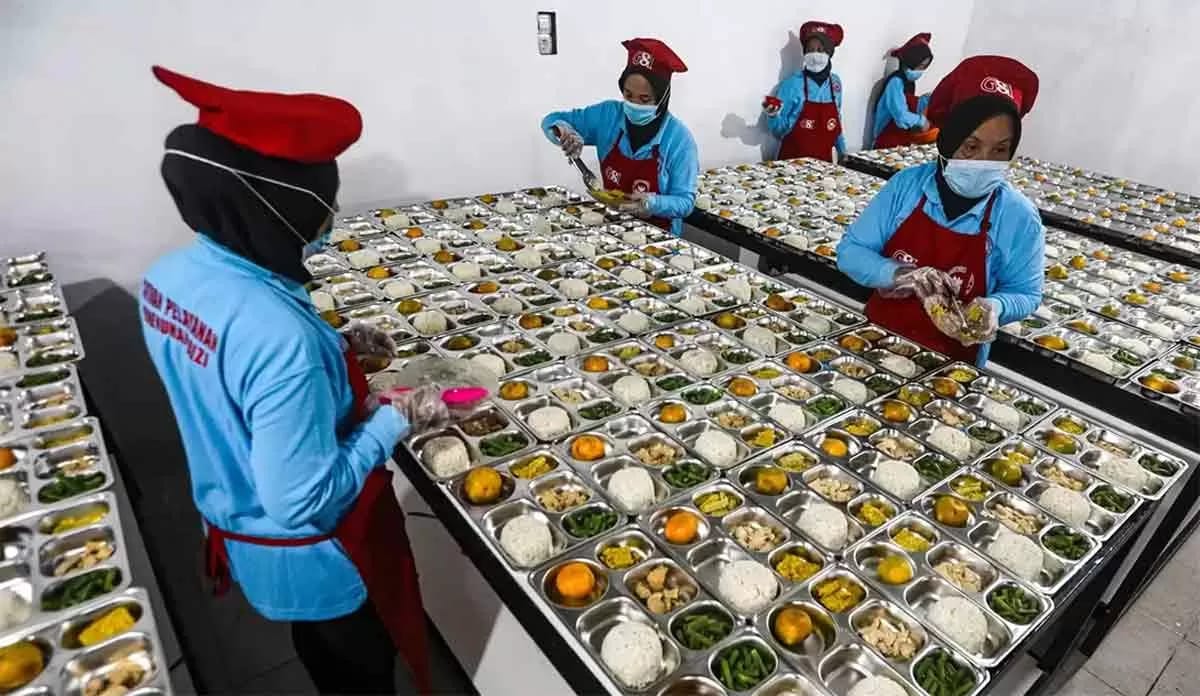
On the domestic front, no program has defined Prabowo’s presidency more than the Free Nutritious Meal (MBG) initiative, an election campaign promise turned national movement.
Launched in early 2025, the program has distributed 1.4 billion meals to 36.2 million beneficiaries, primarily schoolchildren. Despite reports of 8,000 cases of food poisoning, Prabowo defended the program’s success rate of 99.99 percent, calling the incidents statistically insignificant but pledging “zero error” in the future.
“Show me another human effort with 99.99 percent success and they call it a failure?” he quipped during a speech at Universitas Kebangsaan Republik Indonesia (UKRI) in Bandung on Saturday, October 18, 2025.
The MBG initiative, which employs thousands of local kitchens and small suppliers, is seen not only as a nutrition program, but also as a stimulus for local economies, aligning social welfare with economic participation.
Subsidized home program
President Prabowo Subianto launched the subsidized homes program in Indonesia on September 29, 2025. The program, under the Housing Finance Liquidity Facility (FLPP), aims to provide 26,000 subsidized homes for low-income individuals.
Eligible individuals can receive home loans with a credit limit between Rp 10 million and Rp 100 million and will benefit from substantial interest subsidies.
This initiative reflects the government's commitment to address housing needs and improve living standards for low-income citizens.
Already have an account? Sign In
-
Start reading
Freemium
-
Monthly Subscription
20% OFF$29.75
$37.19/MonthCancel anytime
This offer is open to all new subscribers!
Subscribe now -
Yearly Subscription
33% OFF$228.13
$340.5/YearCancel anytime
This offer is open to all new subscribers!
Subscribe now
Set up email notifications for these topics