


Indonesia’s energy transition policies remain inconsistent with the country’s net zero emission target, according to Wicaksono Gitawan, Policy Strategist at the Center for Energy Research and Advocacy on Humanity (CERAH).
Wicaksono said that while the government has set targets for energy transition and issued a moratorium on new coal-fired power plants (CFPPs), national energy policies still provide significant room for fossil fuel use in the coming decades.
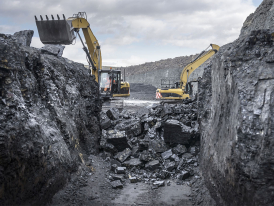
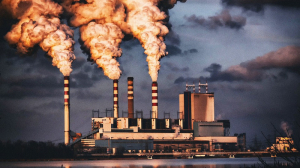
Based on the National Energy Policy (KEN) projection, coal is expected to remain in use until 2060, contributing 7.8 percent–11.9 percent to the national energy mix, while natural gas will account for 14.4 percent–15.4 percent.
“There are still measures designed to extend the life of fossil energy, such as biomass co-firing, which I highlight at around 12–13.4 percent. This shows our transition phase is still very long,” Wicaksono said during the CERAH Expert Panel in Jakarta on Friday, October 17, 2025.
He cited that the issuance of Presidential Regulation (Perpres) No. 112/2022, which limits the construction of new coal plants, was initially welcomed by civil society but still contains several exceptions.
“The regulation still allows coal plants for industrial needs − captive CFPPs − and those mixed with renewable energy,” he noted.
Wicaksono added that the derivative policy, Ministerial Regulation (Permen ESDM) No. 10/2025, which serves as a roadmap for the power sector’s transition, still leaves fundamental gaps.
“It doesn’t list which CFPPs will be retired, excludes captive plants, and lacks a clear timeline. This should have been the main guide to ensure a measurable transition,” he said.
He also highlighted the discrepancy between the National Electricity General Plan (RUKN) and PLN’s Electricity Supply Business Plan (RUPTL), which set different renewable energy targets for 2034 − 29.4 percent in RUKN and 34.3 percent in RUPTL.
“In principle, RUKN should serve as the higher reference, but RUPTL appears more ambitious,” he said.
The latest RUPTL also introduces hybrid CFPP projects, combining coal with renewable energy sources. However, the renewable component remains significantly smaller than the coal capacity.
“This is effectively a loophole in Perpres 112 — while it prohibits new CFPPs in principle, it still opens the door through co-firing or hybrid mechanisms,” Wicaksono said.
CERAH’s projection up to 2060 shows that coal will continue to play a role through biomass co-firing and carbon capture technology at certain power plants.
“If we look at RUKN’s projection, by the 2030s coal plants will begin mixing wood-based biomass and using carbon capture. So even if intensity decreases, coal will still be part of our energy system until 2060,” he said.
Wicaksono concluded that Indonesia’s current policies do not represent a genuine shift from fossil fuels to clean energy.
“What we see is not a real transition − just an extension of old technologies with minor adjustments. It’s still a long way to go before we reach net zero,” he said.
Already have an account? Sign In
-
Start reading
Freemium
-
Monthly Subscription
20% OFF$29.75
$37.19/MonthCancel anytime
This offer is open to all new subscribers!
Subscribe now -
Yearly Subscription
33% OFF$228.13
$340.5/YearCancel anytime
This offer is open to all new subscribers!
Subscribe now
Set up email notifications for these topics