

Indonesia’s booming nickel industry, a cornerstone of the global electric vehicle (EV) supply chain, is mired in widespread human rights abuses, environmental destruction, and coal dependence that undermine global climate goals, according to a new report by Climate Rights International (CRI) released on Thursday, October16, 2025.
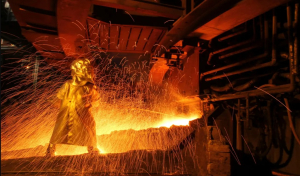
The 115-page report, titled “Does Anyone Care? The Human, Environmental, and Climate Toll of Indonesia’s Nickel Industry,” details how mining and smelting operations across Southeast Sulawesi, Central Sulawesi, and North Maluku have displaced communities, polluted air and water, and relied heavily on coal-fired captive power plants to sustain production.
“In the lead up to COP30 in Brazil, the Indonesian government should demonstrate meaningful leadership by announcing an ambitious, time-bound plan to decarbonize captive coal projects and curb deforestation from nickel mining,” a researcher at CRI, Krista Shennum, said.
“The global energy transition should not be powered by the same environmentally harmful practices perpetuated for decades by extractive industries,” she cited.
Based on interviews with 93 residents and workers living near nickel sites, CRI documented systemic environmental degradation, land grabbing, forced relocations, and intimidation of local communities including Indigenous groups such as the Bajau, Kaliki, and Mori peoples.
Locals reported respiratory problems, water contamination, loss of farmland and fisheries, and growing conflicts with wildlife such as crocodiles due to the destruction of ecosystems.
CRI also found that workers in industrial zones like the 5,500-hectare Indonesia Morowali Industrial Park (IMIP) face hazardous labor conditions, limited safety protections, and gender-based discrimination, including sexual harassment and exposure to toxic materials.
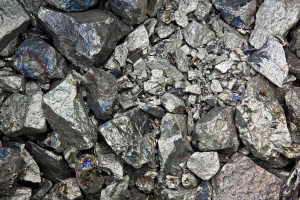
Despite Indonesia’s commitment to renewable energy and its role in supplying more than half of the world’s nickel, the report found that the sector remains overwhelmingly dependent on coal.
Across the country, nickel projects are powered by captive coal plants with a combined generation capacity of 11.6 gigawatts, with another 7 GW under development roughly equivalent to the total coal power capacity of Thailand and the Philippines combined.
Unlike regular coal plants, captive power facilities are not subject to environmental impact assessments or emissions reporting, and they are excluded from Indonesia’s Nationally Determined Contributions (NDC) under the Paris Agreement.
“The expansion of captive coal for nickel smelting is accelerating the climate crisis while providing no benefit to nearby communities,” the report said.
Government policy under scrutiny
The report criticizes the administration of President Prabowo Subianto, saying it has prioritized industrial expansion over environmental and human rights protections.
It also highlights a recent amendment to the Indonesian Military (TNI) Act, which allows active military personnel to hold civilian posts, a move that rights groups warn could deepen militarization in mining regions and reduce accountability.
Over the past decade, Indonesia has positioned itself as a global hub for EV battery production, with exports of nickel derivative products reaching up to US$40 billion in 2024. However, CRI argues that both the government and multinational corporations have failed to address the “systemic abuses” embedded in this growth.
“At multibillion-dollar industrial projects across Indonesia, local communities now find themselves in de facto sacrifice zones. Indonesian, Chinese, and other foreign companies are taking advantage of the climate crisis to extract nickel in an unjust, harmful, and carbon-intensive way,” Shennum said.
Tag
Already have an account? Sign In
-
Start reading
Freemium
-
Monthly Subscription
20% OFF$29.75
$37.19/MonthCancel anytime
This offer is open to all new subscribers!
Subscribe now -
Yearly Subscription
33% OFF$228.13
$340.5/YearCancel anytime
This offer is open to all new subscribers!
Subscribe now
Set up email notifications for these topics