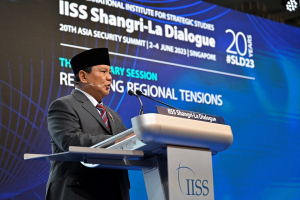
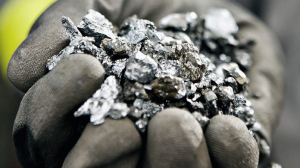
By: Sampe L. PurbaThe Mineral Security Partnership (MSP) is an initiative launched by the U.S. Department of State in 2022. This initiative currently collaborates with 14 countries, including Australia, Canada, Japan, Germany, Finland, and the European Union (EU). The goal is to accelerate public and private investment in a responsible global mineral supply chain.Major mineral-producing countries such as China, Russia, Argentina, Chile, and Malaysia are not part of the MSP. Although India is claimed to be a member, the country often voices criticism that represents the views and interests of developing nations.The MSP functions through various project-focused working groups that engage with project proponents, evaluate project compatibility with ESG standards and MSP strategic objectives, and assess potential modes of MSP support. Partner governments involved in the MSP coordinate across diverse agencies and departments such as those handling foreign affairs, economic policies, energy, trade, development finance, and export finance.The MSP is currently evaluating over a dozen mineral projects worldwide, spanning multiple commodities and stages of the value chain, including processing and recycling initiatives. Partner governments may offer financial, diplomatic, or other forms of support.Main focus of MSPThe MSP emphasizes the need for mineral and metal-based energy projects to be managed with clean technology practices, including mining, extraction, cleaning, processing, refining, and recycling. The main focus is on commodities such as lithium, cobalt, nickel, manganese, graphite, rare earth elements, and copper.The MSP only supports projects that meet global environmental standards, enhance local values, and advance the livelihoods of local communities. The global clean energy transition will only be achieved if countries implement these projects properly. This means that countries that do not adhere to these standards may be excluded or boycotted from the global community concerning funding, technology transfer, and marketing.IEA Critical Minerals Market Review 2023According to data from the International Energy Agency (IEA) Critical Minerals Market Review 2023, the three largest critical mineral processors globally are China, Indonesia, and Chile.China is the producer and processor of 65 percent of lithium, followed by Chile with 29 percent and Argentina with 5 percent. Indonesia produces 43 percent of nickel, followed by China with 17 percent and Russia with 5 percent.China also leads in copper with 42 percent, followed by Chile with 9 percent and Japan with 6 percent. China produces and processes 74 percent of cobalt, followed by Finland with 10 percent and Canada with 5 percent. China produces 90 percent of rare earth elements, followed by Malaysia with 9 percent and Estonia with 1 percent. Even graphite is 100 percent produced in China.Importance of critical mineralsThe above-mentioned critical minerals are key components for clean energy technology, defense systems applications, and manufacturing technology. Lithium, cobalt, nickel, and graphite, for instance, are essential components for electric vehicle batteries and energy storage systems.Rare earth elements are vital for wind turbine magnets, electric vehicles, and defense technologies such as precision-guided munitions and advanced communication systems. Conventional defense systems are based on metals such as iron and copper, which are predominantly controlled by China. Technological superiority lies with the United States, Russia, and the European Union.Geopolitics and geostrategyThe MSP initiative from the United States and other developed countries can be seen as part of a rebalancing policy to pressure producing countries. Environmental protection, democracy (involvement of local communities represented and voiced by social and non-governmental organizations), and the power to dictate market and technology are powerful geopolitical weapons. This is entirely legitimate.In mid-July 2024, the U.S. Deputy Secretary of State for Economic Growth, Energy, and the Environment, Jose Fernandez, visited Indonesia to discuss critical minerals. Some concerns raised included Indonesia's environmental practices, local community involvement, and the dominance of Chinese companies in Indonesia.Collaboration with IndonesiaFernandez's polite language was, "We believe that Indonesia's collaboration, if it joins the MSP, will bring better investment for Indonesia, not just any investment, but investments that benefit the community, respect labor laws, and uphold environmental regulations." Fernandez also stated that Indonesia is one of the seven countries supported to become a semiconductor hub.In response, Coordinating Minister for the Economy Airlangga Hartarto expressed hope that the ease of cooperation, similar to that between the U.S. and Japan, would also apply to Indonesia. Airlangga informed the public that the Indonesian government and Fernandez discussed ways to develop critical minerals and would also cooperate in a Mineral Forum that could be developed as a supply chain platform. The normative position conveyed by Airlangga is appropriate.Indonesia's positionIndonesia has strong bargaining power with its critical mineral resources, including copper and cobalt. To meet fair environmental and legal standards, it should be noted that the regulatory framework, such as the requirement for environmental impact assessments (AMDAL) and community involvement, is accommodated in the Environmental Protection and Management Law (Law No. 32/2009).Mining aspects, including good mining practices, environmental protection, reclamation, and post-mining activities, in accordance with the principles of Environmental Social Governance, are accommodated in Law No. 3/2020 on Mineral and Coal Mining.Indonesia also implements good governance and transparency through anti-corruption measures. Indonesia is a member of the EITI (Extractive Industries Transparency Initiative), which encourages responsible mining. In terms of risk management, mining projects are always preceded by environmental and social risk assessments. Although not perfect, these steps are commendable.Developed countries like the United States and the European Union have also been invited to invest directly in Indonesia's mineral and mining sectors. Value addition is one of the goals of the Sustainable Development Goals. Downstream processing is a way to accelerate this, providing balance and fairness for the host country and community with investor countries, including for good benchmarks in mining management.As a country with an independent and active political stance, President-elect Prabowo Subianto has visited various countries such as China, Russia, and Turkey, as well as opened up to the United States and the European Union. This is a positive signal that should also be utilized by the U.S. government, whoever is elected president.As the name suggests, MSP is a Partnership. Partnership respects equality, balance, discussion, and willingness to listen and be heard. Partnership is not the imposition of unilateral terms or conditions. This is the essence of a civilized and sovereign state and society. Indonesia, the United States, and other countries live and collaborate in this spirit.The writer, Senior Advisor to the Minister of Energy and Mineral Resources (2019-2023), holds Doctoral degree in Energy Geostrategy and is an alumnus of the Indonesian Defense University.