


A new report by Recourse and Trend Asia has uncovered the energy trilemma in extractive energy projects in contrast to their funding practices and impacts to the community and the environment.
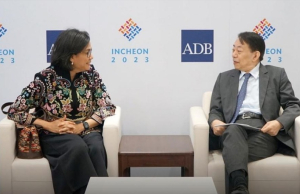
In a specific reference to the development of the fourth liquefied natural gas (LNG) facility at Tangguh, West Papua, the report reveals that since 2005, three Multilateral Development Banks (MDBs) − Asian Development Bank (ADB), International Finance Corporation (IFC), and Asian Infrastructure Investment Bank (AIIB) − have been involved in the expansion of the Tangguh LNG project. The report highlights a direct loan of US$750 million from ADB and indirect support through MDB-affiliated financial intermediaries.
“Since ADB provided a total loan of $750 million in 2005 and 2016, IFC and AIIB also supported its expansion by channeling funds through intermediary lenders. These three MDBs have committed to aligning their operations and investments with the Paris Agreement, yet they continue to fund fossil gas projects that harm the climate,” Marjorie Pamintuan, Financial Campaigner at Recourse, said as quoted in a statement on Monday, October 6, 2025. “Unless they revise their energy policies and stop supporting fossil gas, the MDBs will continue to fail in their commitment to a clean and sustainable future.”.
Since its inception, the Tangguh LNG project has displaced indigenous communities from their ancestral lands in Tanah Merah, destroyed Southeast Asia's largest mangrove forests, and released millions of tons of greenhouse gas emissions. The forests in West Papua cover 24.5 million hectares, or 78 percent of the region, and absorb around 52 million tons of CO2e annually − equivalent to Singapore's total emissions. In addition, the mangrove forests in the Teluk Bintuni region, where the project operates, span 2.25 million hectares.
The forests in West Papua play a crucial role as a carbon sink and help maintain ecosystem balance. The loss of 136,000 hectares of forests in the region is estimated to result in the release of 10.7 million tons of CO2 in 2024. The report also confirmed that 11 hectares of mangrove forests were cleared for the project.
Emissions from the Tangguh LNG project are estimated to have reached 5 million tons of CO2e between 2010 and 2015, and are expected to rise to 8 million tons of CO2e after the commissioning of Train 3 in 2023. This is four times higher than the total emissions of Timor-Leste, which reached 2.01 million tons of CO2e in 2022.
"The expansion of Train 4 and the increase in gas capacity in Indonesia’s 2025 electricity supply plan (RUPTL) could worsen environmental damage and exacerbate inequality in Teluk Bintuni. While MDBs have committed to halting fossil fuel financing, their continued support raises serious questions about the sincerity of their climate commitments,” Novita Indri, Energy Campaigner at Trend Asia, said.
The addition of Train 3 to the project, operated by BP Berau, a subsidiary of British Petroleum, has been cited as a factor driving economic growth in West Papua.
According to Statistics Indonesia (BPS), West Papua’s economic growth reached 20.80 percent in February 2024, the highest in Indonesia. However, BPS data also indicated that the percentage of the population living in poverty in West Papua was 21.66 percent (110,160 people) in March 2024, with a slight decrease to 21.09 percent (108,280 people) in September 2024. Despite the growth, the poverty rate remains significantly higher than the national average of 8.57 percent in September 2024.
“Thus, economic growth does not necessarily reflect the welfare of the local population. This suggests that the benefits have not been felt by the local community, particularly in addressing the structural inequalities in West Papua,” Novita said.
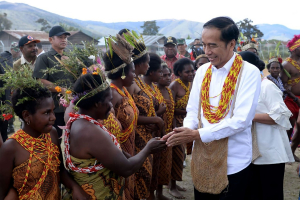
The report also highlights the social and environmental impacts faced by indigenous communities displaced to Tanah Merah Baru and Onar Baru villages. The displacement has led to a shift from traditional fishing and sago farming to agriculture, with changes in consumption patterns contributing to hunger crises in regions, like Korowai and Yahukimo.
“Violence against civilians is a constant risk, particularly with the heavy military presence around the extractive sites in West Papua. The situation is even more sensitive as the Tangguh LNG project has been designated a National Vital Object,” Novita cited.
The Tangguh LNG project has received significant attention during President Prabowo Subianto’s administration. In his speech at the 80th UN General Assembly in New York, the President emphasized that Indonesia is the most affected by the climate crisis and urgent action must be taken. Ambitious steps to meet climate targets must be intensified ahead of COP30.
However, Indonesia faces challenges in achieving its Paris Agreement targets due to the harmful methane emissions from gas projects, which are 80 times more effective at trapping heat than CO2 over a 20-year period, accelerating the climate crisis.
“MDBs must commit to ending all fossil fuel financing, including through financial intermediaries. At the same time, they should focus on increasing public funding to accelerate the transition from fossil fuels to renewable energy,” Novita concluded.
Already have an account? Sign In
-
Start reading
Freemium
-
Monthly Subscription
20% OFF$29.75
$37.19/MonthCancel anytime
This offer is open to all new subscribers!
Subscribe now -
Yearly Subscription
33% OFF$228.13
$340.5/YearCancel anytime
This offer is open to all new subscribers!
Subscribe now
Set up email notifications for these topics