

Adam Fan is the President director of Shanghai Metals Market (SMM), where he leads efforts to develop transparent and reliable price indices for global metals and minerals. With a background in international trade and deep experience in commodity markets, he has been at the forefront of shaping industry benchmarks across Asia, Africa, and emerging markets. In this interview with Indonesia Business Post, Fan shares his vision for fair pricing, his insights on Indonesia’s downstream ambitions, and his personal reflections on economics and leadership.
Mr. Fan, thank you for joining us. To begin, could you share your mission and SMM’s current priorities within today’s global metals ecosystem?
Let me briefly introduce SMM. Our ambition is to produce as many price indices as possible for the global manufacturing industry. Our mission is to reduce transaction costs between manufacturers and encourage cooperation rather than conflict.
Our priority is of course on emerging markets, because the industry is growing here, for example, Indonesia, the Middle East, and Africa. We are investing heavily in these regions.
And how does SMM reduce transaction costs?
Manufacturers tend to use SMM prices as a neutral third-party reference. This allows them to establish long-term contracts, instead of renegotiating every month. It also helps stabilize supply chains.
What sets you apart from the London Metal Exchange?
We do not provide clearing services, because we are not a trading platform. However, people can use our prices to sign long-term contracts. The London Metal Exchange finds prices through transactions between industries and speculators. In SMM, all information and pricing comes directly from industries.
How does SMM collect and analyze data to produce reliable price indices? What are the main challenges in ensuring transparency and accuracy?
There are two main tools. First, very close contact with the industry. Our team maintains continuous communication with industry members to ensure accuracy and reliability.
Second, mathematical tools. Of course, buyers and sellers both want prices in their favor, so we run regressions and other analyses to detect anomalies. For example, if prices are consistently low but suddenly jump, we know something is happening. These tools help us keep our indices neutral and balanced.
Market & Pricing
Looking ahead, what are the key global trends that will shape nickel prices in the coming years?
From our industry data, the most important factor is the switch from NCM to LFP batteries. LFP batteries don’t use nickel, while NCM batteries use more. As more lithium batteries are used for storage and some cars shift from NCM to LFP, nickel demand could decrease.
At the same time, other sectors like robotics and e-mobility still drive demand for NCM batteries. So overall, nickel demand will continue to grow, but not as sharply as before.
Are there other factors, such as policy, that could affect prices?
Yes, policies do affect prices, often in the short term. Another important factor is the narrowing gap between Class 1 nickel (the refined nickel metal traded globally) and Class 2 nickel, which is Indonesia’s main nickel product. Since some manufacturers can now use Class 2 nickel to produce Class 1, the two markets may merge, which also impacts prices.
What about political uncertainty or conflict within a country?
These events happen more frequently today and they create price volatility. In the long run, we hope sudden policy shifts or restrictions will become less common, so the industry and market can make decisions based on economic efficiency.
And geopolitics, nationalism, or global trade sanctions, are they influencing critical mineral prices? What advice would you give to governments while ensuring long-term stability, competitiveness and security in their mineral policy?
This is a profound question. Geopolitics and nationalism are very hot topics, but historically they create temporary disruptions, sometimes more problems for ourselves than for others.
My advice is for governments to carefully study economic fundamentals. For example, Indonesia’s focus on downstream industry is good. But whether it succeeds depends on workforce, demographics, and other economic factors. Governments should avoid frequent, unpredictable policy changes and give the industry time to adjust.
Do geopolitical tensions between mineral-producing countries create risks?
The market and industry today are much stronger and more resilient than in past decades. Even under pressure, the market continues to develop on its own, increasingly independent from politics.
What about NGO criticism in Indonesia on human rights or environmental issues?
Such issues do affect business and costs, but I see them as continuous pressures. Manufacturers must pay more attention to the environment. In the long run, this won’t damage the industry, it will create healthier and more sustainable growth.
Indonesia Focus
What role does SMM play in forming the Indonesian Nickel Price Index (INPI)?
According to our understanding, Indonesia is a very important part of the global nickel market, so having a specific Indonesian price is necessary to represent economic development here. But nickel is also interconnected with China, Japan, Korea, and the Philippines. Our role is to objectively represent the Indonesian market while linking it to international markets.
How does INPI strengthen both Indonesia’s domestic industry and the global market?
INPI is used not only by smelters but also by miners, government agencies, and downstream manufacturers. With a systematic pricing system, companies can cooperate rather than argue. This builds confidence and keeps operations running efficiently. Without it, prices would be unstable and agreements harder to reach, it could even be disastrous.
Just imagine: if their collaboration allows them to maintain a high operating ratio, such as 90%, compared to a lower ratio of 70%, the improvement would be remarkable. A high operating ratio is highly efficient, helping companies build confidence in their daily operations while also encouraging further investment in the industry.
Since China is a major customer of minerals, is SMM’s work in Indonesia partly driven by Chinese companies? Are many Chinese companies still looking to invest in Indonesia?
Yes, many Chinese companies invest here, not only in nickel but also in aluminum and silicon, because Indonesia has the advantage of many resources.
What advice would you give Indonesian and global producers, investors, and policymakers on leveraging INPI?
I think they are already doing well. Indonesian players use INPI intensively and maintain harmonious relationships. We rarely see broken contracts. This stability is positive for the industry.
Besides INPI, what other commodity price benchmarks has SMM developed, in Indonesia and other parts of the world?
SMM covers almost all metals and new energy materials, including batteries, solar, and more. In Africa we cover cobalt, lithium, copper, and bauxite. In total, we cover more than 60 metals. In Indonesia, we also publish price indices for bauxite, alumina, aluminum, tin, and soon silica. Indeed we just signed an MoU with the silica association PERTAMISI, and we are also in discussions with many other associations, trying to build a system for Indonesian industries.
You mentioned creating an industrial system in Indonesia. How do these efforts help improve the country’s downstream industry?
Downstream manufacturers expect two things: the first is a large consumer market, which Indonesia has, and the second is a stable supply of raw materials from upstream, which INPI helps secure. You now have both things in Indonesia.
That is why a lot of downstream manufacturers are looking into this area and they are trying to invest more.
Global Context
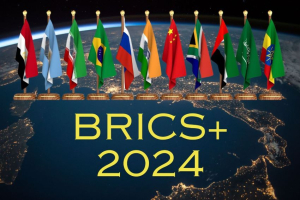
Let’s touch on BRICS. As Indonesia joins, how do you see its impact on global trade and minerals?
BRICS countries like China, Indonesia, and Brazil are working hard to industrialize and grow consumption. With large populations, they create strong demand for minerals, not only as producers but also as consumers. This is reshaping global demand.
Do you encourage other countries to develop their own price indices?
Yes. For example, we also publish cobalt prices in the DRC, Malaysian tin prices, European metals prices, and others. Each market has its own specialty.
Is the goal to reduce dependence on other global exchanges, like the London Metal Exchange?
There is an old saying in China: “The empire, long divided, must unite; long united, must divide. Thus it has ever been.”
If the world has been divided for a long time, it will unite. If it has been united for a long time, it will divide. This reflects the natural cycle of change.
Personal Side
On a personal note, what inspired you to enter the metals and commodities sector?
I studied international trade at Shanghai Jiao Tong University. Curiosity about global trade dynamics and its driving force first brought me here. Second, is a strong will to change the world because I believe that global trade is a very good thing in human society. More trade means less hostility. It allows people to be organized according to natural resources, to cooperate rather than fight each other. By creating price indices, we hope to help industries integrate and work together.
So industrialization is all about collaboration?
Yes. When industries cooperate, they create better products for humanity.
If you could talk endlessly about one topic, what would it be?
Economics. It is counterintuitive, and human behavior is very complex, often leading to unintended results. Good intentions can lead to bad outcomes. Economics drives human behavior every day and produces very complicated overall effects.
This is why it is crucial for companies, communities, and governments to observe and respect the rules of economics. There is still much room for improvement in many countries, not only in China or Indonesia, but also in developed nations. These countries have produced great economists in the past, yet sometimes they seem to forget the very basics of economics.
If you could invite three people, living or dead, to dinner, who would they be?
The first would be John Locke, who wrote many fundamental theories on society and economics. The second is Friedrich Hayek, who studied and wrote extensively about prices and production, closely related to our own price theory. He focused deeply on the relationship between manufacturers and consumers, so I believe Hayek would bring very interesting perspectives.
The third would probably be Elon Musk, because of his vision for manufacturing. Since our prices are designed for manufacturers, it would be valuable to discuss his views on the future organization of manufacturing and how that could guide our own price design.
Finally, do you believe in fate? What does it mean to you?
To me, fate is a function in a given time and in a given space. When time and space change, its value changes. It’s not completely pre-set and our efforts can decisively influence it. So while we must respect nature’s power, we should also do our best to direct our life toward the light.
Already have an account? Sign In
-
Start reading
Freemium
-
Monthly Subscription
20% OFF$29.75
$37.19/MonthCancel anytime
This offer is open to all new subscribers!
Subscribe now -
Yearly Subscription
33% OFF$228.13
$340.5/YearCancel anytime
This offer is open to all new subscribers!
Subscribe now
Set up email notifications for these topics