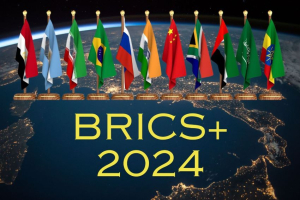



Investment opportunities linked to the BRICS currency are gaining traction as the economic bloc prepares for a breakthrough moment in 2026, when the official launch of a shared BRICS currency is anticipated to take place.
Currently, around 90 percent of trade among BRICS members is already conducted using local currencies. Meanwhile, Indonesia’s accession as a new member, along with interest from more than 30 other countries, further strengthens the bloc’s growth prospects on the global stage.
This 2026 projection makes BRICS-related investment strategies increasingly vital, especially for investors looking to anticipate a major shift in the international financial architecture.
One potential investment channel has emerged through prototype BRICS banknotes, which have already circulated in some member states in denominations of 50, 100, and 200 units. India has even announced plans to introduce a “new form” for BRICS during its chairmanship in 2026.
According to Watcher Guru, government bonds remain the primary choice for investors. Current yields stand at 6.7 percent in Brazil, 6.3 percent in India, and 2.8 percent in China − between 2 to 4 percent higher than U.S. Treasury bonds, making them attractive for global portfolio diversification.
Beyond bonds, exchange-traded funds (ETFs) also provide exposure to BRICS markets. These include the iShares MSCI Brazil ETF (EWZ), India ETF (INDA), China ETF (MCHI), and South Africa ETF (EZA). Policy reforms in South Africa have further strengthened positive signals for BRICS currency-based investments.
On the infrastructure side, the New Development Bank (NDB) has injected about US$30 billion into various projects. This move supports the foundation for the BRICS currency, alongside trials of the BRICS Pay system and the development of central bank digital currencies by member states.
With 46 percent of global GDP and 55 percent of the world’s population, BRICS holds significant weight in the international economic landscape. Analysts estimate that an ideal allocation of 5–10 percent toward BRICS government bonds or NDB-backed infrastructure projects could position investors favorably ahead of the 2026 rollout.
Global investors are expected to strengthen their portfolios early to avoid missing out once the BRICS currency gains momentum in what is projected to be a transformative year for global finance.
Already have an account? Sign In
-
Start reading
Freemium
-
Monthly Subscription
20% OFF$29.75
$37.19/MonthCancel anytime
This offer is open to all new subscribers!
Subscribe now -
Yearly Subscription
33% OFF$228.13
$340.5/YearCancel anytime
This offer is open to all new subscribers!
Subscribe now
Set up email notifications for these topics