


Indonesia is now a leading destination for Chinese green investment, particularly in nickel, precursor materials, and solar panel manufacturing, making it a key part of the global green industry value chain, according to the Net Zero Industry Policy Lab's report, “China’s Green Leap Outward.”
According to the report, Chinese companies have invested nearly US$227–250 billion in green manufacturing projects worldwide, surpassing the value of the United States' Marshall Plan investments in the 1940s. ASEAN remains the region with the most projects, although there has been a notable rise in investments flowing into the Middle East and North Africa. Indonesia, along with Malaysia, Brazil, and Hungary, has consistently attracted stable investments.
“Chinese companies are expanding. However, whether these green mega-projects result in positive development outcomes or merely turn host countries into 'manufacturing islands' depends heavily on domestic policy choices,” Tim Sahay, Co-director of the Net Zero Industrial Policy Lab at Johns Hopkins University, said as quoted in a statement on Monday, September 29, 2025.
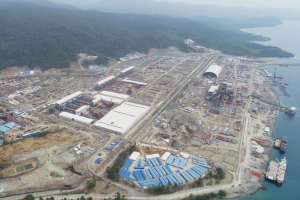
The manufacturing of battery materials has emerged as the largest sector for China’s foreign green technology spending. By including 2025 projects, the commitment exceeds US$62 billion, with a significant portion focused on Indonesia, which holds vast reserves of nickel and cobalt. Battery material producers such as CNGR, Huayou Cobalt, and GEM have concentrated their operations in Indonesia.
The report also notes new hotspots for investment, including Indonesia for battery materials, Morocco for cathode and hydrogen facilities, and the Gulf countries for solar panel and electrolyzer manufacturing. Although Europe and the United States still attract high-value projects, trade barriers have shifted capital flows to Latin America, Central Asia, the Middle East, and North Africa.
Countries with critical minerals, abundant renewable energy, or large consumer markets can position themselves in China’s supply chains − provided there is technology transfer, environmental protection, and local value-added clauses.
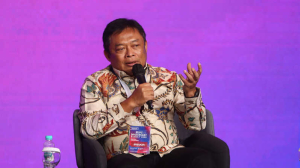
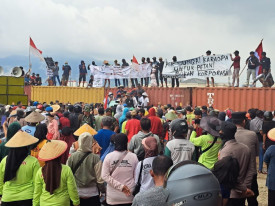
Naomi Devi Larasati, Policy Strategist at CERAH, stated that while collaboration with China is a logical step in accelerating Indonesia’s energy transition, Chinese investments have not been free of issues. From 2015 to 2023, the Indonesian nickel industry recorded 93 workplace accidents, including 21 fatalities at PT Indonesia Tsingshan Stainless Steel. Additionally, PT Indonesia Huabao Industrial Park has been linked to air pollution, leading to a rise in respiratory illnesses in the surrounding area.
“These issues must be addressed for continued Chinese investment in critical minerals and nickel batteries in Indonesia. Indonesia must ensure that these investments benefit local communities, not just the national economy, by creating jobs, transferring technology, and adhering to environmental, social, and governance (ESG) standards,” Larasati emphasized.
Already have an account? Sign In
-
Start reading
Freemium
-
Monthly Subscription
20% OFF$29.75
$37.19/MonthCancel anytime
This offer is open to all new subscribers!
Subscribe now -
Yearly Subscription
33% OFF$228.13
$340.5/YearCancel anytime
This offer is open to all new subscribers!
Subscribe now
Set up email notifications for these topics