


A coalition of civil society organizations has filed a lawsuit against the newly approved 2025-2060 National Electricity Plan (RUKN), citing concerns that it adopts the most wasteful methods for achieving Indonesia’s Net Zero Emission (NZE) target by 2060 and could result in higher electricity prices for citizens and a greater burden on energy subsidies.
The lawsuit was filed with the Jakarta State Administrative Court on Friday, September 26, 2025.
The 2025-2060 RUKN includes the extension of coal power plants until 2060, with expanded biomass co-firing, increased dependence on gas, reliance on carbon capture and storage (CCS) technology for all fossil fuel emissions reductions, and the construction of nuclear power plants. This approach requires an estimated investment of US$1.092 trillion or an average of US$30.33 billion annually.
The coalition, represented by the Bersihkan Indonesia Advocacy Team, argues that this investment is far more costly than a transition to renewable energy sources like solar and wind, which could be implemented on a larger scale. A study by the Institute of Essential Services Reform (IESR) in 2025 found that prioritizing renewable energy, phasing out coal plants earlier, reducing reliance on gas and CCS, and eliminating nuclear power from the RUKN could save up to a third of the projected costs.
The RUKN envisions 54 gigawatts (GW) of coal-fired power plants operational until 2060, peaking at 62.4 GW, with biomass co-firing ranging from 5-30 percent.
Ahmad Ashov Birry, Director of Trend Asia, criticized the plan for ignoring public interests, noting that repeated calls have been made by citizens to halt coal-fired power plants in regions such as Sumatra, Java, Kalimantan, Bali, Sulawesi, and Nusa Tenggara due to their severe impacts on health, local economies, and the environment.
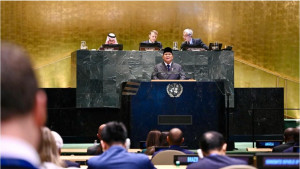
“President Prabowo needs to reconsider his statement at the UN General Assembly, where he claimed that the only option to address the climate crisis was to build a giant sea wall. By continuing to operate coal plants and relying on false solutions, the government is creating unnecessary constraints and limiting its own choices,” Ashov said as quoted in a statement on Monday, September 29, 2025.
The coalition also criticizes the inclusion of CCS technology, which they argue is both unrealistic and costly. Currently, CCS is implemented in only 4-5 power plants worldwide, with costs that can be up to 12 times higher than renewable energy. The plan’s biomass co-firing strategy would also contribute to deforestation, requiring millions of hectares of land to produce biomass.
The RUKN also includes plans for building nuclear power plants with a total capacity of 35-44 GW, which would entail significant investment costs.
Wicaksono Gitawan, Program and Policy Manager at CERAH, stated that nuclear power is more expensive than the electricity tariff set by the government. Additionally, due to limited domestic uranium reserves, Indonesia may be forced to import uranium for the plants, increasing long-term costs.
The RUKN contradicts the National Long-Term Development Plan (RPJPN) and Presidential Regulation No. 112 of 2022, which mandates a roadmap for phasing out coal power plants. The current RUKN, issued by the Ministry of Energy and Mineral Resources, obstructs the planned coal plant closures and deviates from the policies established in RPJPN and Presidential Regulation No. 112.
“We are filing this lawsuit to push for the cancellation of the current RUKN and the issuance of a more realistic plan that can reduce emissions and pollution from coal power plants, includes a roadmap for phasing out coal plants, and increases the share of renewable energy,” Alif Fauzi Nurwidiastomo, Lawyer at the Jakarta Legal Aid (LBH Jakarta) said. “The government must remember that access to a clean and healthy environment is a human right that must be fulfilled.”
The coalition emphasized that President Prabowo Subianto’s commitment to achieving 100 percent renewable energy by 2060 must be reflected in all policies, plans, and programs in Indonesia. They urge the government and the judiciary to ensure that no further wasteful investments benefit only hidden interests, while optimizing renewable energy for its highest climate, economic, social, and environmental benefits.
Already have an account? Sign In
-
Start reading
Freemium
-
Monthly Subscription
20% OFF$29.75
$37.19/MonthCancel anytime
This offer is open to all new subscribers!
Subscribe now -
Yearly Subscription
33% OFF$228.13
$340.5/YearCancel anytime
This offer is open to all new subscribers!
Subscribe now
Set up email notifications for these topics