

Indonesia is facing what experts describe as a “waste emergency,” as growing volumes of trash overwhelm the available landfill space and pose mounting health risks.
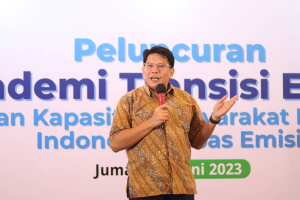
Executive Director of the Institute for Essential Services Reform (IESR), Fabby Tumiwa, said the country can no longer rely solely on expanding landfill sites, which are increasingly difficult to secure in many regions.
“If we keep building final disposal sites (TPA), the real concern is whether regions still have land available. At the same time, TPAs create new public health problems for surrounding communities,” Fabby said as qouted in a statement on Friday, September 26, 2025.
As an alternative, Fabby stressed that waste-to-energy (WtE) projects should be accelerated, noting that the initiative has been on the government’s agenda since previous administrations. However, he cautioned that the high cost of turning waste into energy requires significant government financial backing.
“From processing waste to generating energy and ensuring there are buyers, the entire value chain requires substantial financing. That is why government subsidy and support mechanisms are crucial,” he said.
One key policy under consideration is involving the recently established sovereign wealth agency Daya Anagata Nusantara (BPI Danantara) to stimulate investment in WtE projects.
According to Fabby, having a dedicated state investment body could strengthen oversight and accountability, while ensuring the projects deliver measurable outcomes.
“The potential for waste-to-energy projects in Indonesian cities is actually quite strong, and many are ready to implement them,” Fabby cited.
Analysts believe a successful rollout of WtE infrastructure could help Indonesia confront its mounting waste crisis while contributing to the country’s broader transition toward renewable energy and its target of reaching net-zero emissions by 2060.
Meanwhile, Waste management practitioner, Bijaksana Junerosano, underscored the importance of State investment management agency Danantara’s coordinating role in bridging central government, local authorities, and the private sector.
Such coordination, he said, would help resolve recurring obstacles, including financing gaps, inconsistent waste supply, and environmental risks.
“If this coordination is carried out consistently, waste-to-energy projects can become a systematic, transparent, and sustainable solution,” Bijaksana said.
Already have an account? Sign In
-
Start reading
Freemium
-
Monthly Subscription
20% OFF$29.75
$37.19/MonthCancel anytime
This offer is open to all new subscribers!
Subscribe now -
Yearly Subscription
33% OFF$228.13
$340.5/YearCancel anytime
This offer is open to all new subscribers!
Subscribe now
Set up email notifications for these topics