


The Mining Advocacy Network (Jatam) has quesioned the effectiveness of the Forest Area Enforcement Task Force (Satgas PKH) in preventing forest destruction and mining injustices faced by communities despite claim of successful reclamation by the government.
"Reclaiming 321 hectares from a mining concession that spans over 45,000 hectares is simply a distraction. This action doesn't even begin to address the root causes of land loss, environmental degradation, and the violations that have plagued local communities for years," Alfarhat Kasman, a Jatam campaigner, said as quoted in a statement on Thursday, September 25, 2025.
Minister of Energy and Mineral Resources (ESDM), Bahlil Lahadalia, recently announced that Indonesia has successfully reclaimed 321.07 hectares of mining land from two companies involved in illegal forest encroachment. The reclaimed land includes 148.25 hectares from PT Weda Bay Nickel (WBN) in North Maluku and 172.82 hectares from PT Tonia Mitra Sejahtera in Southeast Sulawesi.
The land reclamation is the outcome of a series of enforcement actions carried out by the Forest Area Enforcement Task Force (Satgas PKH), established through Presidential Regulation No. 5/2025 on February 4, 2025. This task force, also known as "Halilintar," was formed to address illegal land occupation within forest areas.
One of the key concerns surrounding the reclamation process is the composition and approach of the enforcement task force, which is heavily influenced by military and law enforcement figures. The task force is led by the Ministry of Defense. With membership including the Attorney General’s Office, the Indonesian Military (TNI), the National Police, and the Development Finance Comptroller (BPKP), with the ESDM Ministry playing a leading role as part of the team.
This militaristic approach raises concerns about the legitimacy and effectiveness of the task force's operations. The involvement of military personnel in enforcement actions was considered as legally unfounded as the Ministry of Defense lacks the relevant expertise to handle environmental crimes. Furthermore, critics argue that the presence of military figures in the task force reflects an increasing trend towards militarization in environmental enforcement, which may stifle transparency and public involvement.
"The government's decision to involve the Ministry of Defense and military personnel in the enforcement of forestry laws only serves to tighten control over the process, raising questions about the transparency and fairness of the entire operation," Alfarhat said.
Environmental crisis
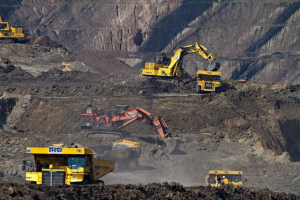
PT Weda Bay Nickel, one of the companies involved in the land reclamation, has been at the center of significant environmental destruction in Halmahera. Being part of the strategic national project PT Indonesia Weda Bay Industrial Park (IWIP), the company has allegedly been responsible for massive deforestation in the region, with 4,190 hectares of primary forest destroyed between 2019 and 2024.
Beyond deforestation, Alfarhat said, the company's operations have drained critical water resources. IWIP’s water usage exceeds that of the entire population of Central Halmahera, drawing massive amounts of water from local rivers, including the Kobe, Sake, and Wosia rivers. This water extraction has left local communities, especially those in villages like Sagea and Kiya, struggling to access clean water.
He said further that IWIP’s operations have severely impacted the local fishing industry, with the construction of the smelter and the associated environmental damage having led to the destruction of vital marine ecosystems, including coral reefs, mangroves, and seagrass beds, which are essential for the local fishing economy.
Local communities bear the brunt
The destruction caused by PT Weda Bay Nickel and IWIP has not only harmed the environment, but also led to a severe loss of livelihoods for local residents. Villages that once relied on agricultural land for food production have seen their farmlands converted into mining zones, leading to food insecurity. The surrounding areas, once food-rich, have been devastated, leaving communities dependent on external sources for their sustenance.
“As a result of the environmental destruction, the fishing communities around Halmahera are now forced to rely on fish supplies from other regions such as Gebe Island and Oba in Tidore. The local population, once self-sufficient in food and fish, now faces a struggle to maintain their livelihoods,” Alfarhat said.
Health impacts
In addition to environmental and economic damage, the mining activities of PT Weda Bay Nickel have led to a deterioration in public health. Respiratory issues such as Acute Respiratory Infections (ARI) and bronchitis have become prevalent among the local population. Dermatitis cases have also seen an uptick in the areas surrounding the mining operations.
In 2023, Jatam tested water samples from several local rivers, including Wosia, Kobe, and Ake Doma, and found hazardous levels of nickel, cobalt-platinum, ammonia, and nitrates, far exceeding the acceptable limits for potable water. This contamination has further exacerbated the health crisis, making it unsafe for locals to use these rivers for drinking, cooking, and daily household needs.
Despite the government’s claims, the return of 321 hectares of land is a far cry from a genuine solution to the larger issues at hand. The government’s actions appear to be a mere public relations exercise, designed to give the impression that they are actively addressing environmental issues, while continuing to support large-scale extractive industries that harm both the environment and local communities.
"The government's claim of success is nothing more than an illusion," Alfarhat said. "The real problem is that these corporate giants continue to operate with impunity, exploiting the land and people of Halmahera for their own profit. The reclamation of a few hectares is symbolic at best, failing to address the deep-rooted issues that these mining operations have caused."
For the residents of Halmahera, the reclamation of land by the government does little to alleviate the suffering caused by years of unregulated mining and environmental exploitation.
“ As long as the government continues to prioritize corporate interests over the welfare of its citizens, the region will continue to suffer,” Alfarhat concluded.
Already have an account? Sign In
-
Start reading
Freemium
-
Monthly Subscription
20% OFF$29.75
$37.19/MonthCancel anytime
This offer is open to all new subscribers!
Subscribe now -
Yearly Subscription
33% OFF$228.13
$340.5/YearCancel anytime
This offer is open to all new subscribers!
Subscribe now
Set up email notifications for these topics