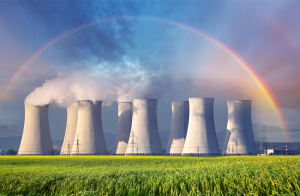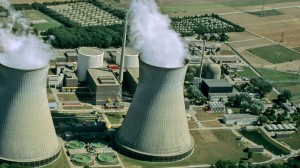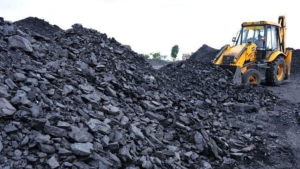



The Task Force for Cs-137 Radiation Hazards Mitigation has begun efforts to decontaminate radioactive material across six sites in Cikande, Serang, Banten, after traces of cesium-137 were recently detected in Indonesian shrimp exports to the United States in August.
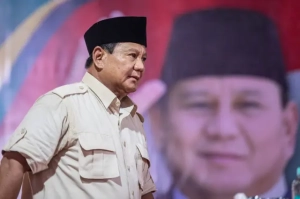
The task force is led by Environment Minister Hanif Faisol Nurofiq, who personally oversaw the removal of contaminated materials. Authorities identified a potential radiation source in the form of 700 kilograms of scrap metal stored in a local scrapyard in Barengkok village. The hazardous waste was transported to a temporary storage facility at the Modern Cikande Industrial Estate.
“The government has established a special team to handle this matter, and starting today, the decontamination process will be carried out in stages,” Hanif said as quoted in a statement on Tuesday, September 23, 2025.
Hanif was accompanied by officials from the Ministry of Environment and Forestry, the Nuclear Energy Regulatory Agency (Bapeten), the National Research and Innovation Agency (BRIN), and members of the Nuclear, Biological, and Chemical (KBRN) unit. Bomb squad (Gegana) personnel from the National Police’s Mobile Brigade Corps also provided security to ensure strict safety protocols, preventing the radioactive particles from becoming airborne.
The contaminated Cs-137 materials were transported using lead-lined trucks. Meanwhile, decontamination work also continues at five additional sites suspected of radioactive exposure.
To rehabilitate the affected environment, experts have proposed planting sunflowers, a plant known for its ability to absorb and reduce radiation through phytoremediation.
Zaki Suud, Professor of Nuclear Engineering at the Bandung Institute of Technology (ITB), said the contamination may have originated from industries mishandling hazardous chemicals or from foreign actors dumping nuclear waste in Indonesia.
“Therefore, monitoring potential illegal dumping of nuclear and other hazardous waste from abroad into Indonesia must be strengthened,” he told Tempo on Wednesday, September 24, 2025.
Zaki acknowledged that the use of sunflowers for phytoremediation is scientifically plausible. However, he warned that Cs-137 remains radioactive regardless of chemical or physical processes, and effective cleanup typically requires standard decontamination methods − similar to those used in Japan after the Fukushima nuclear disaster. “But this approach involves extremely high costs,” he added.
Already have an account? Sign In
-
Start reading
Freemium
-
Monthly Subscription
20% OFF$29.75
$37.19/MonthCancel anytime
This offer is open to all new subscribers!
Subscribe now -
Yearly Subscription
33% OFF$228.13
$340.5/YearCancel anytime
This offer is open to all new subscribers!
Subscribe now
Set up email notifications for these topics