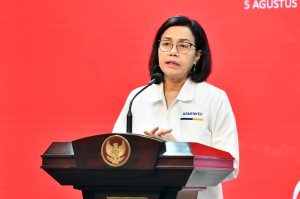



The Indonesian Foundation for Sustainable Welfare (SUSTAIN) has submitted four policy recommendations to Finance Minister Purbaya Yudhi Sadewa aimed at reducing electricity subsidies by accelerating the use of solar energy.
“Minister Purbaya’s intention to develop solar power as a way to reduce energy subsidies is a positive measure, aligned with the urgent agenda of decarbonizing the energy sector, particularly electricity,” Tata Mutasya, Executive Director of SUSTAIN, said as quoted in a statement on Monday, September 22, 2025
He emphasized that reducing electricity subsidies can only be achieved if the generation cost of solar power falls below that of coal-fired power plants (PLTU), which currently supply 60 percent of Indonesia’s electricity.
According to the Ministry of Finance, energy subsidies in 2024 reached Rp177.62 trillion (US$10.6 billion), an 8.1 percent increase from 2023. Electricity subsidies made up the second-largest portion at 42.7 percent, or Rp75.8 trillion, rising 10.4 percent from the previous year.
Tata stressed that for fiscal sustainability and Indonesia’s net-zero target by 2050, the share of renewable energy must be expanded significantly. This aligns with the Electricity Supply Business Plan (RUPTL) 2025–2034, which includes solar energy development. However, large-scale acceleration is only planned after 2029.
To support this transition, SUSTAIN proposed four policy recommendations:
1. Provide solar power incentives across sectors
The Ministry of Finance, in cooperation with the Ministry of Energy and Mineral Resources (ESDM), should grant incentives for solar power plants (PLTS) for industries, businesses, and households.
Tata highlighted how incentives proved key to boosting Indonesia’s electric vehicle (EV) market, where EVs rose from 9 percent of passenger vehicle sales in 2023 to 15 percent in 2024, and are projected to reach 29 percent by 2030.
2. Expand solar power use at regional level
Together with ESDM ministry and State-owned utility PLN, the Finance Ministry should encourage massive PLTS adoption in local regions to achieve economies of scale and lower costs. Currently, only Bali and Jakarta have local regulations supporting solar power. Between 2019 and 2024, installed solar capacity grew by only 763.8 MW, far below gigawatt-level targets.
3. Link solar power expansion with domestic manufacturing
SUSTAIN recommends integrating solar energy expansion with local industries such as solar panel and battery manufacturing. Investment should be redirected toward building a domestic solar supply chain.
According to SUSTAIN, part of the financing could come from the China Belt and Road Initiative (BRI). In 2023, China invested US$900 million in Indonesian energy projects under BRI − 43.75 percent in coal and 56.25 percent in renewables. Redirecting the coal portion to renewables could generate about Rp14.4 trillion annually to fund domestic solar manufacturing and green jobs. The RUPTL 2025–2034 projects that solar energy could create 348,057 jobs.
4. Develop a smart grid network
The government, ESDM ministry, and PLN must accelerate the development of a smart grid, estimated to cost US$19.6 billion (Rp325.08 trillion). Funding could be secured by increasing coal production levies. “The grid is the key to scaling up solar energy development,” Tata noted.
Already have an account? Sign In
-
Start reading
Freemium
-
Monthly Subscription
20% OFF$29.75
$37.19/MonthCancel anytime
This offer is open to all new subscribers!
Subscribe now -
Yearly Subscription
33% OFF$228.13
$340.5/YearCancel anytime
This offer is open to all new subscribers!
Subscribe now
Set up email notifications for these topics