


A decade after the Paris Agreement, countries around the world, including Indonesia, are still planning to increase fossil energy production until 2030, which is expected to be 120 percent higher than the volumes required to meet the 1.5°C target.
This revelation comes from the latest "Production Gap Report 2025," published by the Stockholm Environment Institute (SEI), Climate Analytics, and the International Institute for Sustainable Development (IISD). According to the report, one of the largest drivers of the production gap is the expansion of coal and gas. Coal production in 2030 is projected to be 7 percent higher than in 2023, while gas production will exceed projections by 5 percent.
The report also reveals that production plans for coal, oil, and gas from the 20 largest fossil energy-producing countries − Including Indonesia − collectively account for approximately 80 percent of global fossil energy production.
“In 2023, the world’s governments acknowledged the need to phase out fossil energy to mitigate the climate crisis, a responsibility now emphasized by the International Court of Justice. However, this report shows that despite commitments to transition to clean energy, many countries are planning increases in production compared to two years ago,” Derik Broekhoff, Director of the Climate Policy Program at SEI’s U.S. Center, said in a statement on Monday, September 22,2025.
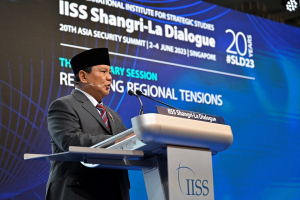
Specifically for Indonesia, the report highlights the inconsistency in government energy policies. Although President Prabowo Subianto has reaffirmed the country’s commitment to achieving 100 percent renewable energy by 2035, oil production is still set to increase by 65 percent by 2030 compared to 2023 levels. Energy self-sufficiency is being used as justification for this increase. Indonesia also aims to boost domestic gas production by 60 percent, citing a desire to reduce dependency on imports.
This contradictory policy raises concerns about the government’s commitment to climate action. Furthermore, Indonesia has yet to submit its 2025 Nationally Determined Contributions (NDCs) document. The last update, in 2022, reaffirmed a target of reducing emissions by 32 percent by 2030 through domestic efforts, or 43 percent with international support.
Wicaksono Gitawan, Program and Policy Manager at CERAH, emphasized the urgency for Indonesia to submit its Second NDC (SNDC) to the United Nations Framework Convention on Climate Change (UNFCCC). The SNDC must include more ambitious climate targets to align with the renewable energy commitment President Prabowo declared.
“The delay in submitting the SNDC earlier this year risks undermining Indonesia’s credibility on the global stage. We hope the government will not miss the new deadline at the end of September. The SNDC is not just a document; it is proof of the government’s seriousness in reducing emissions and accelerating the energy transition,” Wicaksono stressed.
To meet the Paris Agreement targets, Indonesia and all countries must reaffirm their commitments by implementing serious efforts to reduce fossil energy production more rapidly and significantly. Governments worldwide need to develop coordinated and planned policies to ensure a fair transition from fossil fuels.
Emily Ghosh, Director of the Just Energy Transition Program at SEI, emphasized that governments around the world need to act swiftly to shift investments from fossil fuels to renewable energy. This commitment should be made by all countries at the upcoming 30th United Nations Climate Change Conference (COP30).
“At COP30, governments must commit to expanding renewable energy, managing energy demand, and implementing a people-centered transition to get back on track with the Paris Agreement. Without this commitment, and if we continue to delay mitigation efforts, emissions will rise, and the impacts of climate change will worsen for the most vulnerable communities,” Ghosh said.
Already have an account? Sign In
-
Start reading
Freemium
-
Monthly Subscription
20% OFF$29.75
$37.19/MonthCancel anytime
This offer is open to all new subscribers!
Subscribe now -
Yearly Subscription
33% OFF$228.13
$340.5/YearCancel anytime
This offer is open to all new subscribers!
Subscribe now
Set up email notifications for these topics