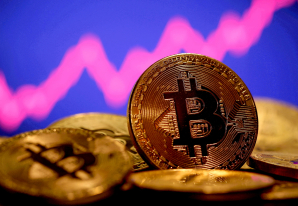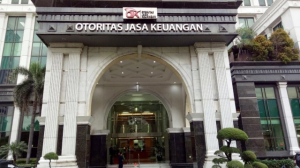


The Commodity Futures Trading Regulatory Agency (Bappebti) is set to focus on its core function after its tasks of regulation and supervision of digital financial assets, including cryptocurrency and financial derivatives, have officially been transferred from the agency to the Financial Services Authority (OJK) and the Indonesian Central Bank (BI).
The agency will now concentrate on developing Commodity Futures Trading (PBK) based on superior commodities and optimizing the Warehouse Receipt System (SRG) and Commodity Auction Markets (PLK).
“The transfer of Bappebti’s regulatory and supervisory roles on digital financial assets, including cryptocurrency and financial derivatives, to OJK and BI has been effective since January 10, 2025. This is governed by Law No. 4/2023 on The Development and Strengthening of the Financial Sector (UU P2SK). However, the public is still not fully aware of this shift. Therefore, Bappebti, together with OJK and BI, continues to work on educating the public as part of the commitment of these three regulatory bodies,” Bappebti Head, Tirta Karma Senjaya, said in Jakarta on , September 12, 2025.
He cited that the regulatory and supervisory tasks transferred to OJK include cryptocurrency assets and financial derivatives, such as stock indices and single stocks, while BI will now oversee Money Market and Foreign Exchange derivatives.
“This transition aims to provide legal certainty and strengthen the digital financial and financial derivatives sectors,” he said.
Asked about recent online media reports titled “Bappebti releases official list of registered crypto asset platforms and brokers for 2025,” Tirta clarified that Bappebti no longer processes licenses for physical cryptocurrency traders following the transfer of regulatory authority. This clarification is necessary to prevent the public from falling into the traps of illegal entities.
“The public can visit Bappebti's website to confirm the list of physical cryptocurrency traders licensed by Bappebti before the transfer of authority. For others, they can verify the legality of cryptocurrency traders with OJK,” he said.
Currently, Bappebti continues to play an important role in overseeing three key regulations: Law No. 10/2011 on Amendments to Law No. 32/1997 on Commodity Futures Trading (PBK); Law No. 9/2011 on Amendments to Law No. 9/2006 on the Warehouse Receipt System (SRG); and Presidential Regulation No. 75/2022 on the Organization, Guidance, and Development of the Commodity Auction Market (PLK).
In PBK, Bappebti is focused on increasing transactions, particularly multilateral transactions based on Indonesia's key commodities. The PBK is expected to strengthen commodity trading, one of its goals being the formation of reference prices in futures exchanges.
To encourage multilateral transactions, Bappebti has issued Regulation No. 2/2025 on the Second Amendment to Bappebti Regulation No. 3/2019. This regulation includes new commodities such as nickel and silver as eligible subjects for futures contracts, Sharia derivatives contracts, and other derivative contracts traded on futures exchanges.
Other key instruments under Bappebti’s focus are the SRG and PLK. These instruments support the strengthening of both domestic and global commodity trade. SRG and PLK are programs closely tied to the community, allowing various sectors, including farmers, fishermen, and miners, to use them for commodity storage and financing, while businesses (such as cooperatives, SMEs, and industries) benefit from them to maintain the continuity and quality of goods and commodities.
“The integration of SRG and PLK will continue to be strengthened to support national economic growth,” Tirta concluded.
Transactions
For the period of January–July 2025, the value of PBK transactions reached Rp25.964 trillion (US$1.73 billion) with a volume of 8.17 million lots. Both the value and volume of PBK transactions increased by 50.9 percent and 5.4 percent year-on-year, respectively.
For SRG, from January to August 2025, the total value issued was Rp1.28 trillion (US$85.33 million) with a volume of 68,360 tons for 330 warehouse receipts. SRG transactions supported commodities such as tin, coffee, seaweed, fish, soybeans, tobacco, sugar, rice, and unhusked rice.
Meanwhile, the value of PLK transactions from January to August 2025 was Rp15.86 billion (US$1.06 million), representing auctions held in Riau, Aceh, and West Java, with a total of 31 auction sessions.
Already have an account? Sign In
-
Start reading
Freemium
-
Monthly Subscription
20% OFF$29.75
$37.19/MonthCancel anytime
This offer is open to all new subscribers!
Subscribe now -
Yearly Subscription
33% OFF$228.13
$340.5/YearCancel anytime
This offer is open to all new subscribers!
Subscribe now
Set up email notifications for these topics