


Indonesia Business Post
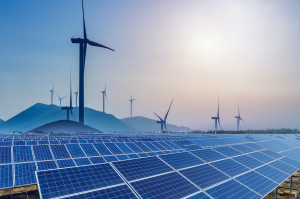
The government, in collaboration with key state-owned enterprises, is intensifying measures to accelerate the energy transition in the transportation sector as part of its commitment to achieve Net Zero Emissions (NZE) by 2060 through a broad range of initiatives, from biofuel development to the expansion of the battery electric vehicle (BEV) ecosystem.
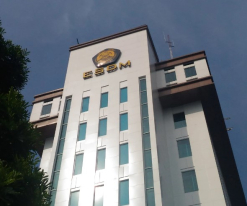
In a recent presentation, Director General of New, Renewable Energy and Energy Conservation at the Ministry of Energy and Mineral Resources (ESDM), Eniya Listiani Dewi, emphasized the transportation sector’s critical role in the national energy transition roadmap.
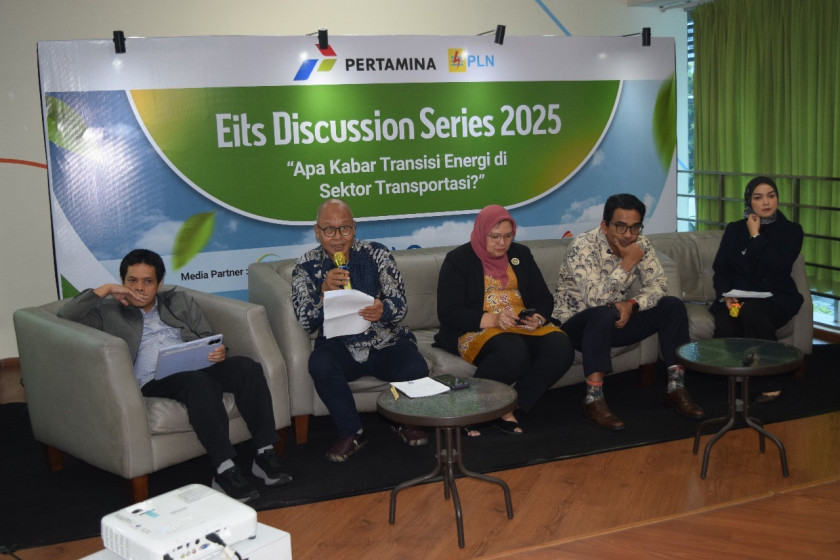
"Energy transition must strike a balance between national energy independence, economic growth, and environmental sustainability. Given its significant contribution to carbon emissions, the transportation sector is a top priority," Eniya said in her presentation during the EITS Discussion Series 2025: The Future of Transport Energy Transition, held in Jakarta on Wednesday, September 10, 2025.
Eniya outlined that the government’s strategy includes electrification of transportation, as well as the development of bioethanol, biodiesel, and sustainable aviation fuel (bioavtur) for the aviation industry.
“The grand design for transport energy transition is aimed at achieving long-term emission reductions,” she said.
EV charging infrastructure
State electricity company PT PLN has reaffirmed its role as a key driver of electric vehicle infrastructure development. According to Executive Vice President for Project Development, Financing and Licensing, Moch Padang Dirgantara, PLN has adopted an end-to-end approach starting from renewable-based power generation to customer-oriented public EV charging stations (SPKLU).
“As of September 2024, PLN had deployed over 2,100 charging stations across 1,463 locations, along with 2,200 battery swap stations. A year later, that number has doubled to 4,216 charging units in 2,800 locations, from Aceh to Papua,” Dirgantara reported.
He noted that PLN’s infrastructure rollout is open to public participation. “Through Energy Ministry Regulation No. 182/2023, we’re opening investment opportunities to MSMEs, cooperatives, and even individuals. This inclusive approach will ensure that the EV ecosystem grows in a way that benefits all stakeholders,” he said.
Despite these advancements, electric vehicle adoption in Indonesia is facing headwinds. Member of the National Energy Council (DEN), Dina Nurul Fitria, pointed out a recent slowdown in EV sales growth, attributing it to the expiration of purchase incentives.
“Previously, government subsidies, including relaxed financing schemes from state-owned banks, played a key role in stimulating EV demand. But after these incentives ended and given limited consumer purchasing power interest has waned,” Dina cited.
She also highlighted that the decreasing prices of internal combustion engine (ICE) vehicles have made them more attractive. “Even consumers who can afford a new car tend to opt for non-EVs,” she said.
Already have an account? Sign In
-
Start reading
Freemium
-
Monthly Subscription
20% OFF$29.75
$37.19/MonthCancel anytime
This offer is open to all new subscribers!
Subscribe now -
Yearly Subscription
33% OFF$228.13
$340.5/YearCancel anytime
This offer is open to all new subscribers!
Subscribe now
Set up email notifications for these topics