


Minister of Finance, Purbaya Yudhi Sadewa, has attributed recent waves of public protests across Indonesia to long-standing policy missteps in the country’s fiscal and monetary management, calling for urgent corrections to avoid further economic strain.
He said the unrest was not simply a political or social phenomenon, but the result of accumulated economic pressure stemming from past policy failures.
“What you saw in those protests was a manifestation of prolonged economic stress due to fiscal and monetary policy errors issues that are actually within our control,” he told legislators during a hearing with finance Commission XI of the House of Representatives (DPR) on Wednesday, September 10, 2025.
The finance minister also questioned the role of Commission XI in overseeing the government’s economic strategies, noting that frequent meetings with the previous finance minister failed to spark the necessary scrutiny over policy direction.
“My question is, how many hundreds of meetings have you had with the former finance minister in a year? Why were these issues never raised? Now that I’m here, suddenly there are many questions. But that’s alright. Going forward, my priority is to fix those mistakes first,” he said.
Purbaya emphasized that his primary focus would be to implement “quick wins” by accelerating government spending, as nearly 90 percent of Indonesia’s economy is driven by domestic demand.
“This is where we can correct our mistakes,” he said.
During the session, Purbaya also drew parallels to the 1997–1998 Asian financial crisis, describing it as a cautionary tale of how flawed monetary policy can devastate the economy.
“When countries like Thailand and South Korea were hit, why were we the most severely impacted? I’ve studied what went wrong back then and how we can respond better if such a crisis were to happen again,” he asked.
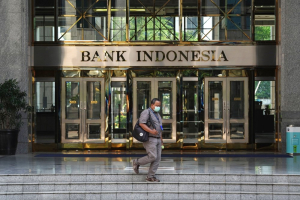
He criticized the Indonesian Central Bank’s (BI) policy at the time, which saw interest rates spike to over 60 percent in an effort to stabilize the rupiah, while at the same time the government significantly increased the money supply.
“On the surface, we were implementing tight money policy. But in reality, we printed money and grew the supply by 100 percent. It was chaotic. If you mix contradictory policies, the demons of economic instability are unleashed,” he warned.
Purbaya concluded that such high interest rates had crippled the real sector, while the excessive liquidity undermined the exchange rate, compounding the country’s economic collapse.
“In the end, we were unknowingly financing our own destruction. It wasn’t because the economists back then were incompetent, but because we had never faced such a situation before,” he said.
Already have an account? Sign In
-
Start reading
Freemium
-
Monthly Subscription
20% OFF$29.75
$37.19/MonthCancel anytime
This offer is open to all new subscribers!
Subscribe now -
Yearly Subscription
33% OFF$228.13
$340.5/YearCancel anytime
This offer is open to all new subscribers!
Subscribe now
Set up email notifications for these topics