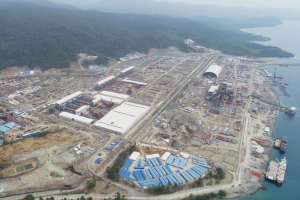



The Ministry of Energy and Mineral Resources (ESDM) has confirmed that PT Gag Nickel, a subsidiary of state-owned miner PT Antam, has resumed operations on Gag Island, Raja Ampat, Southwest Papua.
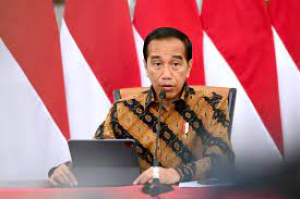
“As far as I know, it has resumed operations as of Wednesday, September 3, 2025” Director General of Minerals and Coal at the ESDM Ministry, Tri Winarno, said on Monday, September 8, 2025.
ESDM Minister Bahlil Lahadalia had previously ordered a temporary halt to Gag Nickel’s activities on June 5, 2025, pending verification from an ESDM review team. The company was prohibited from carrying out production until the evaluation process was completed.
Tri cited that the decision to allow operations to restart was based partly on environmental compliance results. According to the Ministry of Environment and Forestry, Gag Nickel was awarded a “Green Proper” rating − an official certification indicating compliance with environmental management standards as well as community development initiatives.
“A Green Proper means the company complies with all environmental governance requirements and has also carried out community empowerment,” Tri said, adding that the decision was made jointly by several ministries, including ESDM, the Environment Ministry, and the Ministry of Marine Affairs and Fisheries.
The suspension of Gag Nickel earlier this year followed a report from Greenpeace, which highlighted mining activity on several Raja Ampat islands, including Gag, Kawe, and Manuran.
Under Indonesia’s Law No. 1/2014 on Coastal and Small Islands Management, mining is prohibited on small islands. Greenpeace alleged that nickel exploitation had already cleared more than 500 hectares of forest and natural vegetation on these islands. Documentation also showed evidence of soil runoff causing sedimentation along the coasts, posing risks to coral reefs and marine ecosystems in Raja Ampat.
Raja Ampat is recognized globally as a biodiversity hotspot, home to 75 percent of the world’s coral species, more than 2,500 species of fish, 47 mammal species, and 274 species of birds. UNESCO has also designated the area as a global geopark.
Already have an account? Sign In
-
Start reading
Freemium
-
Monthly Subscription
20% OFF$29.75
$37.19/MonthCancel anytime
This offer is open to all new subscribers!
Subscribe now -
Yearly Subscription
33% OFF$228.13
$340.5/YearCancel anytime
This offer is open to all new subscribers!
Subscribe now
Set up email notifications for these topics