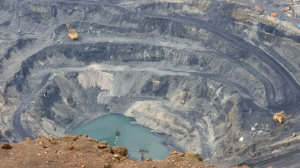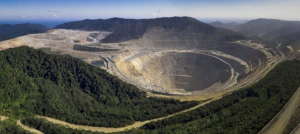


The expansion of PT Baoshuo Taman Industry Investment Group (BTIIG) in Morowali, Central Sulawesi, poses a serious threat to high conservation value (HCV) areas and the livelihoods of local communities, according to research by Action for Ecology and Environmental Research (AEER).
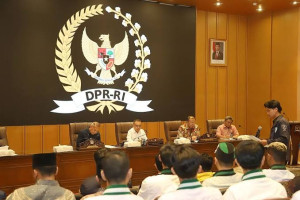
The findings were presented during a public discussion and report launch held in Jakarta on Friday, August 29, 2025.
AEER researcher Riski Saputra cited that nickel industry activities have caused heavy sedimentation in coastal areas, covering traditional fishing grounds and forcing local fishermen to sail further offshore.
“Since the smelter began operating, fishermen must travel two to three hours from Karatan area just to catch fish,” Riski said.
He added that approximately 3,900 hectares of HCV areas are included in BTIIG’s industrial plan, which should have been excluded to preserve ecological functions.
Director of Kompas Peduli Hutan Foundation, Gifvents Lasimpo, highlighted the impact on wildlife. He said that forest conversion has drastically reduced primate populations in nearby villages.
“From 23 monkeys once found in a village, only four remain today,” he noted.
Anggi Pertiwi Putri, Planner for Directorate Environment at Indonesia Ministry of National Planning and Development, emphasized that environmental indicators are now an integral part of the upcoming National Long-Term Development Plan (RPJPN) 2025–2045.
“For the first time, environmental indicators stand at the same level as macro development indicators, including greenhouse gas emissions intensity, environmental quality index, and a new Biodiversity Management Index,” Anggi explained.
The discussion also raised concerns over the lack of externality assessments in industrial projects. AEER stressed that the ecological value of losses in Morowali’s forests is estimated at Rp298 trillion (US$18 billion) per hectare per year, a loss that will be irreversible if conservation areas continue to be converted.
Moderator and Kompas journalist Ahmad Arif closed the session by underlining the importance of integrating AEER’s research into public policy to safeguard the Wallacea ecosystem and support sustainable development goals.
Already have an account? Sign In
-
Start reading
Freemium
-
Monthly Subscription
20% OFF$29.75
$37.19/MonthCancel anytime
This offer is open to all new subscribers!
Subscribe now -
Yearly Subscription
33% OFF$228.13
$340.5/YearCancel anytime
This offer is open to all new subscribers!
Subscribe now
Set up email notifications for these topics