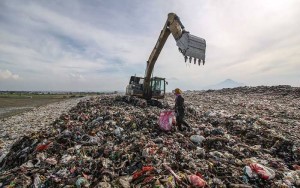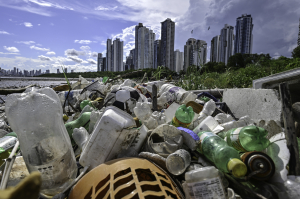


The Intergovernmental Negotiating Committee (INC) 5.2, a global plastics treaty that began on August 5, 2025, has been deemed a failure and has failed to meet its stated goal of reaching an agreement to end plastic pollution.
INC 5.2 was mandated by United Nations Environment Assembly (UNEA) Resolution 5/14 in March 2022 to develop an International Legally Binding Instrument aimed at ending plastic pollution, including marine pollution.
This instrument was previously targeted for completion in 2024. However, due to difficult negotiations, INC 5.1 in South Korea failed to reach an agreement and was continued with INC 5.2 this year. However, after 10 days of negotiations, observers deemed the process to be non-transparent and unfair. As an example, the plenary session, scheduled for August 14, 2025, was postponed 16 hours, citing "work is ongoing."
"This long, compromising process has failed to produce a clear agreement or direction for ending plastic pollution," Nindhita Proboretno, Co-Coordinator of the Zero Waste Indonesia Alliance (AZWI), said on Friday, August 15, 2025.
The forum also involved 234 fossil fuel and chemical industry lobbyists, outnumbering the 27 European country representatives. AZWI believes this dominance exerted strong pressure to weaken the agreement.
"Fundamental issues such as limiting plastic production and eliminating hazardous chemicals were barely touched upon," Nindhita said.
She said further that the involvement of observers in the forum was limited, unlike that of industry lobbyists in the negotiations. Until the final draft of the agreement was distributed, civil society groups and observers had no opportunity to provide their views.
"Cutting out the voices of civil society, scientists, and affected communities not only undermines transparency but also undermines the legitimacy of this process," Rahyang Nusantara, Deputy Director of Dietplastik Indonesia, said.
Furthermore, observers and several countries participating in the High Ambition Coalition, such as the UK, the European Union, Colombia, Panama, and Fiji, rejected the Chair's Text, deeming it weak.
"This failure further threatens the environment and human health and only allows the fossil fuel industry to continue profiting from the climate crisis," Ibar Akbar, Zero Waste Campaigner for Greenpeace Indonesia, said.
No significant progress
The agreement text includes progress by regulating the entire life cycle of plastics, reinstating references to chemicals of concern in Article 4, and recognizing the rights of indigenous peoples in several areas. However, overall, the agreement does not adequately protect human health.
"The production of primary plastic and plastic chemicals has now exceeded the carrying capacity of our planet," Yuyun Ismawati, Senior Advisor at the Nexus3 Foundation, said.
Furthermore, there is no specific clause on reducing plastic products, and the agreement text does not link plastic to the climate crisis or the polluter pays principle.
During the INC 5.2 negotiations, the ministerial-level meeting also had the opportunity to visit a recycling facility. However, the agreement text does not contain any clear rules or systems to encourage the public to switch to recycling or refilling solutions.
The resulting agreement ultimately focuses solely on waste management, neglecting the reduction of plastic production and the control of hazardous chemicals.
Indonesia’s commitment
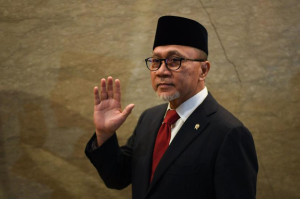
Environment Minister Hanif Faisol Nurofiq stated Indonesia's commitment to leading global efforts to end plastic pollution in the Global Plastics Agreement negotiations in Geneva, Switzerland. The Indonesian government's statement was delivered at the INC 5.2 discussing the drafting of a legally binding international instrument on plastic pollution.
"There is a need for a negotiation process that is inclusive, fair, and respects the unique conditions of each country, especially developing countries that require technological support, financing, and investment from developed countries," Hanif said as quoted by Antara on Sunday, August 17, 2025.
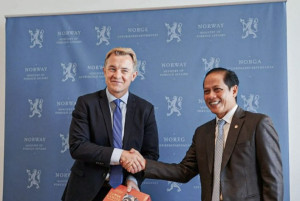
Hanif also attended a ministerial-level roundtable meeting, a public-private dialogue, bilateral meetings with Swiss, British, and Dutch officials, and a visit to a local recycling facility.
During the roundtable meeting, Hanif expressed Indonesia's concern over the lack of progress in negotiations on the Global Plastic Treaty, which is considered urgent to address the serious threat of plastic pollution. He stated that Indonesia has set a national target to ensure 100 percent of waste, including plastic, is recycled.
Already have an account? Sign In
-
Start reading
Freemium
-
Monthly Subscription
20% OFF$29.75
$37.19/MonthCancel anytime
This offer is open to all new subscribers!
Subscribe now -
Yearly Subscription
33% OFF$228.13
$340.5/YearCancel anytime
This offer is open to all new subscribers!
Subscribe now
Set up email notifications for these topics