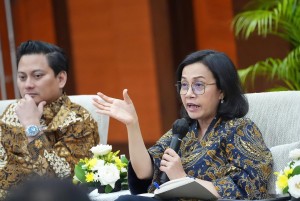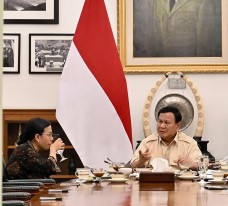


Minister of Finance Minister, Sri Mulyani Indrawati, has announced that the government will increase the social protection budget by 8.6 percent year-on-year to Rp508.2 trillion (US$31.5 billion) in 2026, the majority of which − about 62 percent − will be allocated for basic needs programs worth Rp315.5 trillion.
The largest portion of this category is energy subsidies, amounting to Rp210.1 trillion, covering fuel, electricity, and 3-kilogram LPG for households.
“Energy subsidies next year will amount to Rp210.1 trillion, while non-energy subsidies such as transport and water subsidies will reach Rp17.4 trillion. In addition, direct cash assistance worth Rp6.5 trillion will be distributed to 1.8 million beneficiary families,” Sri Mulyani said at her office on August 15, 2025.
To improve the accuracy of aid distribution, the government plans to use the National Socio-Economic Single Data (DTSEN). This measure is particularly important as Rp28.7 trillion is allocated to the Family Hope Program (PKH) and Rp43.8 trillion to the Food Assistance Card Program.
Another large component is the Rp69 trillion health insurance subsidy for the national health scheme (BPJS Kesehatan), which will support 96.8 million citizens unable to pay premiums and an additional 49.6 million requiring partial premium assistance.
The government has also allocated Rp86.2 trillion for community empowerment initiatives. This includes Rp36.5 trillion in subsidized People’s Business Credit (KUR) for 6.1 million borrowers and Rp49.7 trillion for 9.6 million tons of subsidized fertilizer.
According to the Statistics Indonesia (BPS), Indonesia’s poverty rate in September 2024 fell to 24.06 million people, down by 1.16 million from March 2024 and 1.84 million from March 2023. The poverty rate now stands at 8.57 percent, the lowest since BPS began recording data in 1960.
“The poverty rate of 8.57 percent in September 2024 is the lowest ever recorded in Indonesia,” BPS Head Amalia Adininggar Widyasanti said at a press conference in Jakarta on January 15, 2025.
However, experts caution that the data may not reflect realities on the ground. Media Wahyudi Askar, Public Policy Director at the Center of Economic and Law Studies (Celios), argued that the national poverty line set by BPS is too low compared to international standards.
“That is why we see many people still struggling, but according to BPS data, only about 8 percent are considered poor,” he said.
Already have an account? Sign In
-
Start reading
Freemium
-
Monthly Subscription
20% OFF$29.75
$37.19/MonthCancel anytime
This offer is open to all new subscribers!
Subscribe now -
Yearly Subscription
33% OFF$228.13
$340.5/YearCancel anytime
This offer is open to all new subscribers!
Subscribe now
Set up email notifications for these topics