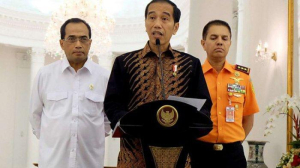



President Prabowo Subianto’s administration has presented the 2026 State Budget (RAPBN), targeting a growth rate of 5.2–5.8 percent and aiming to keep the fiscal deficit at 2.53 percent of GDP.
The government projects a significant increase in revenue, with total state income estimated between Rp3.094 trillion and Rp3.114 trillion (US$199 billion and US$201 billion), up from Rp2.865 trillion (US$182 billion) in 2025.
"The RAPBN 2026 presents a balanced approach, combining optimism for growth with a commitment to fiscal discipline," Syafruddin Karimi, a lecturer at the Department of Economics, Andalas University, said as quoted in a statement on Friday, August 15, 2025.
Meanwhile, State expenditure for 2026 is expected to rise to between Rp3.800 trillion and Rp3.820 trillion (US$241 billion and US$243 billion), reflecting a focus on infrastructure, food security, energy, and defense. This aligns with a Keynesian approach, with public spending seen as a tool for stimulating economic growth.
However, the budget's optimism comes with a major challenge: the projected deficit of Rp706 trillion (US$45.5 billion). While this figure is substantial, the deficit as a percentage of GDP is lower than the 2.78 percent seen in 2025, indicating the government's efforts to maintain fiscal discipline while expanding spending.
The budget’s assumptions may face unexpected hurdles, particularly due to global economic pressures. U.S. President Donald Trump has reintroduced a 19 percent import tariff, a policy that could disrupt global supply chains, decrease Indonesia’s exports, and weaken the rupiah. These external factors could impact the 2026 RAPBN’s assumptions, especially regarding inflation, exchange rates, and oil prices.
To manage these challenges, the government will need effective coordination between fiscal and monetary policies. The Ministry of Finance will focus on maintaining productive public spending, while Bank Indonesia works to stabilize the rupiah and control inflation.
The 2026 State Budget is seen as a crucial step for Indonesia's economic future, balancing growth ambitions with the need for fiscal discipline in a volatile global environment.
Already have an account? Sign In
-
Start reading
Freemium
-
Monthly Subscription
20% OFF$29.75
$37.19/MonthCancel anytime
This offer is open to all new subscribers!
Subscribe now -
Yearly Subscription
33% OFF$228.13
$340.5/YearCancel anytime
This offer is open to all new subscribers!
Subscribe now
Set up email notifications for these topics