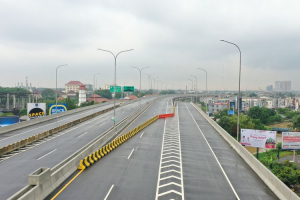



Delayed implementation of the Multi-Lane Free Flow (MLFF) toll collection system in Indonesia is attributed to the absence of a clear business model between toll road operators (BUJT) and the prospective operator Roatex, which involves crucial discussions around core business functions, profit-sharing mechanisms, wages, and security protocols.
"Everything is still under debate," infrastructure and urban planning expert, Yayat Supriatna, spoke to Indonesia Business Post on Monday, August 11, 2025.
Transportation expert Anton Budiharjo of the Tegal-based Road Transportation Safety Polytechnic cited that the delay is partly due to conflicting interests regarding toll collection. Under the existing e-money toll collection system, BUJTs are responsible for collecting toll payments. In contrast, the MLFF system would introduce a designated government agency for toll collection, rendering the e-money system obsolete. "E-money will no longer apply," Budiharjo added.
The MLFF system introduces an app called Cantas, which allows drivers to activate a GPS feature and load their balance onto the app. As vehicles pass toll gates, the toll fee is automatically deducted from their balance. However, the deducted funds will not go to a bank but to a government-appointed collection agency.
This shift in toll collection has caused discontent among BUJTs, particularly private sector operators who view toll roads as their business.
"Why should the money go elsewhere? It should come to us," said a private sector operator.
BUJTs fear that if the public is aware of the toll revenue figures, it might lead to higher taxes.
Private sector resistance is especially prominent among foreign-invested toll operators who see Indonesia as an attractive investment destination. However, they worry that changes in government policy might deter future foreign investment in Indonesia's toll road sector. Conversely, state-owned toll road operators are expected to comply with government policies.
Background
In 2020, PT Roatex Indonesia Toll System (RITS), a subsidiary of the Hungarian company Roatex Group, won the tender for the application of Indonesia’s toll payment system using the Multi-Lane Free Flow (MLFF) technology. This system utilizes Global Navigation Satellite System (GNSS) technology to conduct transactions via the Cantas app on smartphones. GPS determines the vehicle's location through satellite data, and map-matching processes occur in a central system.
When the vehicle exits the toll road and map-matching is completed, the system calculates the toll fare. This technology aims to improve the toll payment process by allowing vehicles to continue moving without stopping, eliminating traffic jams at toll booths, reducing travel time, and enhancing efficiency.
According to the Ministry of Public Works, the MLFF system is the result of a bilateral cooperation between Indonesia and Hungary aimed at improving Indonesia's toll payment system. The project was initiated during Hungarian Prime Minister Mr. Viktor Orbán’s visit to Indonesia in 2016. The Hungarian government is investing 100% of the project, with an investment value of IDR 4.49 trillion or US$ 294,12 million , under a Government and Business Entity Cooperation (KPBU). The KPBU scheme aims for an investment target of IDR 4.49 trillion or US$ 294,12 million . The MLFF project is set to be implemented gradually according to a roadmap prepared by the Ministry of Public Works.
Already have an account? Sign In
-
Start reading
Freemium
-
Monthly Subscription
20% OFF$29.75
$37.19/MonthCancel anytime
This offer is open to all new subscribers!
Subscribe now -
Yearly Subscription
33% OFF$228.13
$340.5/YearCancel anytime
This offer is open to all new subscribers!
Subscribe now
Set up email notifications for these topics