


Indonesia Business Post
Foreign and domestic investors ask the government to overhaul its current Work Plan and Budget (RKB) policy by introducing a stable, multi-year framework to support long-term investment in the country’s nickel industry.
Despite nickel’s position as a strategic commodity and major contributor to Indonesia’s foreign exchange revenue, industry players say the RKB requirement renewed annually creates unnecessary risks and instability for long-term capital commitments.
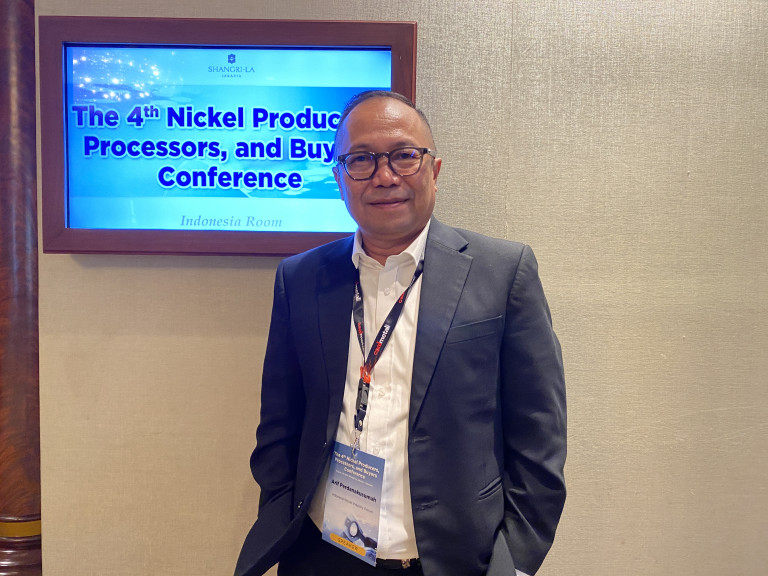
Speaking at the 4th Nickel Producers, Processers, and Buyers Conference in Jakarta, on Thursday, August 7, 2025. Chairman of Indonesia Nickel Industry Forum (FINI) Arif Perdanakusumah cited that uncertainty around annual RKB renewals hampers investment confidence in one of Indonesia’s most strategic sectors.
“RKB is supposed to be multi-year, but in reality, it has to be renewed every year. That defeats the purpose. One year is simply too short for investors. We need long-term clarity to ensure continuity and return on investment,” Arif said.
Industry leaders cited recent cases where companies failed to secure RKB renewals by year-end, leading to halted operations, lost revenue, and disrupted supply chains.
“That’s a full year’s income gone. A full year’s value evaporated. For us, that’s unsustainable,” he noted.
The nickel industry, he added, represents a critical source of Indonesia’s national wealth and one of its top foreign exchange earners. Disruptions in operational planning due to regulatory uncertainty will not only harm companies, but also impact government revenues and broader economic targets.
Investors outlined six regulatory pillars they believe are essential to sustaining Indonesia’s appeal for long-term foreign direct investment (FDI) in the sector.
First, clear and consistent regulations. In a highly dynamic industry influenced by global price shifts and rapid technological change, predictable rules are crucial.
Second, Protection of property rights. This includes strong safeguards for intellectual property, land rights, and contractual agreements to give investors confidence.
Third, Stable pricing regime. A reliable pricing framework helps investors avoid unexpected financial liabilities in future operations.
Fourth, Transparency in licensing. Simplified and transparent permitting processes are seen as key to enhancing Indonesia’s competitiveness.
Fifth, Export policy consistency. Stakeholders praised the 2014 nickel export ban for its regulatory clarity, which remains in place today.
Then, Sixth Regulatory stability. This was cited as the cornerstone of long-term planning, particularly in RKB-related matters.
While the export regulation has provided some degree of consistency, investors pointed out that the RKB process remains a major source of regulatory friction.
“The inconsistency in RKB implementation is a real problem,” Arif noted. “We need a regulatory roadmap that’s predictable and reliable not just for today, but for the next five to ten years,” he added.
As global interest in Indonesia’s downstream nickel ecosystem continues to rise, particularly in the electric vehicle (EV) battery supply chain, industry insiders warn that without reform, the country risks losing investment momentum to more investor-friendly jurisdictions.
“There is no shortage of capital. But what we need is certainty. And that starts with fixing the RKB framework,” Arif said.
Already have an account? Sign In
-
Start reading
Freemium
-
Monthly Subscription
20% OFF$29.75
$37.19/MonthCancel anytime
This offer is open to all new subscribers!
Subscribe now -
Yearly Subscription
33% OFF$228.13
$340.5/YearCancel anytime
This offer is open to all new subscribers!
Subscribe now
Set up email notifications for these topics