

A recent report titled Behind The Green Curtain by the Center of Economic and Law Studies (CELIOS) reveals troubling evidence of greenwashing and transition washing in Chinese-funded investment projects across Indonesia.
While these initiatives are marketed under the China-Indonesia Belt and Road Initiative (BRI) as “green, open, and clean,” CELIOS argues that the on-the-ground realities paint a different picture.
Greenwashing refers to misleading or exaggerated environmental claims about a project, product, or service. According to Zulfikar Rakhmat, Director of CELIOS’ China-Indonesia Desk, greenwashing doesn't always involve false information − it can also take the form of selective omission.
“It may be true that they conduct corporate social responsibility (CSR), but other impacts or aspects might not be disclosed,” Zulfikar spoke on an online forum held in Jakarta on Thursday, August 7, 2025.
The report highlights how narratives of sustainability are often driven by both Chinese and local actors − including companies, media outlets, and social media influencers. CELIOS specifically points to Chinese government representatives in Indonesia who actively promote a green image on social platforms. Meanwhile, the websites of corporations such as PT IMIP and PT OSS also echo similar narratives.
However, the dissemination of these misleading claims is not limited to foreign entities. CELIOS notes that some Indonesian public officials have also contributed to the greenwashing narrative, with several local media outlets reinforcing these claims.
On-the-ground investigations by Trend Asia further underscore the challenges. In PT IMIP industrial zone, which employs hundreds of thousands, healthcare infrastructure remains severely inadequate − only capable of serving about 2,000 workers. Frequent workplace accidents further spotlight the lack of proper safety measures.
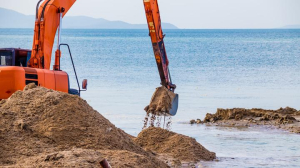
Zakki Amali, Research Manager at Trend Asia, also pointed to environmental exploitation in Raja Ampat and other small islands like Wawonii, Obi, and Gag − many of which involve Chinese investments despite existing Indonesian regulations banning mining activities on islands smaller than 2,000 square kilometers.
Zulfikar emphasized the urgent need for greater accountability and transparency from Chinese companies operating in Indonesia. He criticized the current system in which companies evaluate their own compliance with environmental, social, and governance (ESG) standards.
“This is not accountable. There should be a standard to determine whether a company meets ESG requirements or not,” he argued.
However, Zulfikar noted that China should not shoulder all the blame. He cited that Chinese investors typically adapt to the host country’s regulatory environment.
“Chinese investment always follows how the host country enforces its regulations,” he said, calling for Indonesia to strengthen its domestic policies.
CELIOS’ report further alleges that the Indonesian government itself has perpetuated greenwashing narratives. Weak environmental oversight and lax enforcement allow companies like PT IMIP and PT IWIP to expand operations beyond what was approved in their environmental impact assessments (AMDAL), often facing minimal consequences.
“It’s as if we’re the ones in need, so we open our doors as wide as possible to China,” Zulfikar concluded.
The findings raise serious concerns about the environmental and social costs of unchecked foreign investment and highlight the pressing need for regulatory reform in Indonesia.
Already have an account? Sign In
-
Start reading
Freemium
-
Monthly Subscription
20% OFF$29.75
$37.19/MonthCancel anytime
This offer is open to all new subscribers!
Subscribe now -
Yearly Subscription
33% OFF$228.13
$340.5/YearCancel anytime
This offer is open to all new subscribers!
Subscribe now
Set up email notifications for these topics