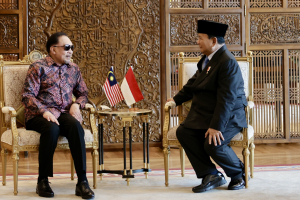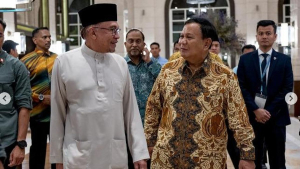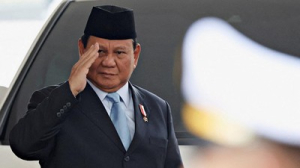


The 13th Annual Consultation in Jakarta between Indonesian President Prabowo Subianto and Malaysian Prime Minister Anwar Ibrahim has concluded with key agreements aimed at strengthening bilateral relations and regional cooperation.
The consultation marked a significant step in enhancing political, economic, and socio-cultural ties between the two nations, while addressing pressing regional and global issues.
President Prabowo and Prime Minister Anwar expressed satisfaction with positive developments in key areas, notably political cooperation, economic ties, and people-to-people exchanges. Both reaffirmed their commitment to building a stronger strategic partnership, underpinned by historical connections.
“We also celebrated the successful negotiations regarding the maritime boundary delimitation, with both nations making significant progress towards resolving long-standing disputes in this area,” read the joint statement of the two leaders on Wednesday, July 30, 2025.
Economic cooperation and investment
A major highlight was the agreement to further boost economic collaboration. Both leaders welcomed advancements in bilateral trade and investment, underscoring the importance of facilitating smoother trade flows, particularly in areas such as agriculture, infrastructure, and renewable energy.
They acknowledged the convening of the First Malaysia-Indonesia Investment Cooperation Working Group and committed to exploring opportunities for further investment, particularly in sectors such as pharmaceuticals, electronics, and low-carbon energy.
Cross-border connectivity and trade
The two leaders also emphasized the importance of enhancing cross-border connectivity. Malaysia’s plans to open the Serikin Immigration, Customs, Quarantine, and Security Complex (ICQS), complementing the existing Jagoi Babang Cross-Border Post in Indonesia, were highlighted as a critical step in promoting trade and economic integration between the two nations.
This initiative, along with the progress on land demarcation, is expected to drive economic growth, particularly in border communities.
Halal industry and blue economy
Both leaders reiterated their shared commitment to halal industry and sustainable marine resource management. They underscored the need to streamline trade processes in the halal sector and promote cooperation under the ASEAN Blue Economy Framework to ensure sustainable development of marine and fisheries resources.
Security and humanitarian issues
On regional security, the two leaders stressed their ongoing commitment to ASEAN's central role in ensuring peace and stability. They expressed deep concern over the violence in Myanmar and reaffirmed their support for the ASEAN Five-Point Consensus as the roadmap to peace.
Additionally, they voiced their shared commitment to addressing the humanitarian crisis in Gaza and supporting the recognition of a sovereign Palestinian state based on pre-1967 borders.
Future cooperation
In closing, both leaders agreed to convene the 17th Joint Commission for Bilateral Cooperation (JCBC) as a follow-up to the outcomes of this meeting. They also confirmed that the 14th Annual Consultation would be held in Malaysia in 2026, with specific dates to be determined via diplomatic channels.
The Joint Statement concluded with both leaders reiterating their mutual commitment to fostering stronger bilateral ties, regional stability, and global cooperation, with particular focus on economic development, security, and humanitarian issues.
Already have an account? Sign In
-
Start reading
Freemium
-
Monthly Subscription
20% OFF$29.75
$37.19/MonthCancel anytime
This offer is open to all new subscribers!
Subscribe now -
Yearly Subscription
33% OFF$228.13
$340.5/YearCancel anytime
This offer is open to all new subscribers!
Subscribe now
Set up email notifications for these topics