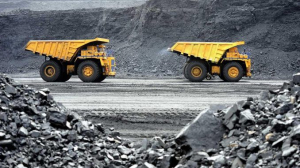


Indonesia's current green finance taxonomy risks undermining the country’s ambition to lead the global green industrialization race due to its lenient treatment of mining and coal-fired power sectors, according to a new report by the Energy Shift Institute (ESI).
The report, "Two Mining Powerhouses, Two Different Standards: Australia’s and Indonesia’s Contrasting Taxonomies," compares how Indonesia and Australia − two of the world’s largest coal exporters − classify mining-related activities in their respective sustainable finance taxonomies. It finds that Indonesia’s Sustainable Finance Taxonomy (TKBI) allows mining and processing projects to be labeled as “transitional” activities even without verified decarbonization plans, unlike Australia’s more rigorous, science-based criteria.
“If the goal is to direct investment toward a resilient and low-carbon mining and mineral future, then the current framework risks doing the opposite,” Hans Sutikno, ESI researcher and co-author of the report, said as quoted in a statement on Monday, July 28, 2025. “Without urgent reforms, Indonesia’s taxonomy may lock in coal dependency, mislead investment flows, and erode investor confidence in its green transition agenda.”
Australia’s taxonomy only grants “transitional” status to high-emission sectors if they align with a 1.5°C pathway and follow the Net Zero Emissions framework by the International Energy Agency (IEA) and Science Based Targets initiative (SBTi).
Conversely, Indonesia’s taxonomy emphasizes compliance with domestic regulations and allows the use of coal-fired electricity within projects, potentially qualifying them as “transitional” with little evidence of actual emission cuts.
“There is no requirement in Indonesia’s taxonomy to demonstrate gradual emission reductions or provide verifiable proof. It rewards intentions rather than impact,” Hans cited.
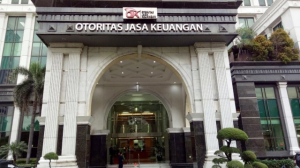
Discrepancy in standards comes at a time when both countries face increasing pressure from global investors to provide credible definitions of green industrial investments. ESI urges Indonesian regulators, particularly the Financial Services Authority (OJK) and the Ministry of Energy and Mineral Resources, to seize the opportunity presented by the ongoing taxonomy revision process.
“Taxonomies are more than technical frameworks − they are strategic signals of national direction,” Christina Ng, ESI Managing Director and veteran climate finance expert, said. “The credibility of Indonesia’s green industry ambitions hinges on getting this taxonomy right.”
A sustainable finance taxonomy is an official classification system used to identify economic activities that are environmentally sustainable, in transition, or unsustainable. It serves as a guide for investors, businesses, and policymakers in steering the country toward a low-carbon economy.
Already have an account? Sign In
-
Start reading
Freemium
-
Monthly Subscription
20% OFF$29.75
$37.19/MonthCancel anytime
This offer is open to all new subscribers!
Subscribe now -
Yearly Subscription
33% OFF$228.13
$340.5/YearCancel anytime
This offer is open to all new subscribers!
Subscribe now
Set up email notifications for these topics