

Indonesia to spend Rp578 trillion under U.S. trade deal, experts urge caution

  • Published on 25/07/2025 GMT+7

  • Reading time 2 minutes

  • Author: Julian Isaac

  • Editor: Imanuddin Razak

Indonesia must prepare around Rp578 trillion (US$35.4 billion) to fulfill commitments under a trade agreement proposed by the U.S. President Donald Trump, including US$15 billion in oil and gas imports, the purchase of 50 Boeing aircraft, and US$4.5 billion worth of U.S. agricultural products, an economist has warned.

“While the deal secures a tariff reduction from 32 percent to 19 percent for Indonesian exports to the U.S., it could strain Indonesia’s state budget (APBN) if not carefully managed,” Paramadina University economist Didin Damanhuri said while addressing the Katadata Policy Dialogue on Thursday, July 24, 2025.

He questioned the feasibility of National flag carrier Garuda Indonesia purchasing 50 Boeing planes, calling for further evaluation of the national airline’s capacity and financial standing.

Didin also expressed concern over the energy imports, noting that they consist of fossil fuels − in contrast to the green energy transition goals of President Prabowo Subianto’s administration. He urged policymakers to assess whether the agreement aligns with broader economic indicators, such as rural purchasing power and farmer welfare.

Responding to the concerns, National Economic Council member Mochamad Firman Hidayat said that the Rp578 trillion import package would not burden the national budget because it would be financed entirely by the private sector. He added that Garuda's Boeing order was initiated before the trade talks, and the energy imports are not additional but rather a diversion from existing suppliers to the U.S..

Firman also highlighted that 40 percent of U.S. commodities imported to Indonesia already have zero percent tariffs, implying that the deal would not drastically disrupt the domestic industry.

Already have an account? Sign In

  • Freemium

    Start reading
  • Monthly Subscription
    20% OFF

    $29.75 $37.19/Month


    Cancel anytime

    This offer is open to all new subscribers!

    Subscribe now
  • Yearly Subscription
    33% OFF

    $228.13 $340.5/Year


    Cancel anytime

    This offer is open to all new subscribers!

    Subscribe now

Set up email notifications for these topics

Read Also

  • Indonesia Business Post

    Garuda to purchase more Boeing aircraft up to 79 units amid U.S. tariff talks

    National flag carrier, Garuda Indonesia, will increase its planned Boeing aircraft purchase to 79 units in a strategic move linked to ongoing trade negotiations with the United States, according to State Owned Enterprises (SOEs) Minister Erick Thohir.

  • gedung_kementerian_BUMN

    SOEs to focus on six key sectors to drive national economy

    The Ministry of State-Owned Enterprises (SOEs) is pushing for state-owned companies to focus on six key sectors − basic infrastructure development, mineral industry downstreaming, energy security and defense system modernization, tourism development, SME initiatives, and agricultural development − to boost domestic economy.

  • erick

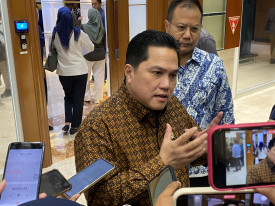
    Erick Thohir targets merger of three state-owned airlines by Q1 2025

    Minister of State-Owned Enterprises (BUMN), Erick Thohir, has targeted the merger of three state-owned airlines − PT Garuda Indonesia, PT Pelita Air Service and PT Citilink Indonesia − in the first quarter of this year.

  • Terusan-Panama image source: Rakyatpembaruan

    Panama Canal and Trump's strategic outburst

    The construction of the 82-kilometer Panama Canal, which connects the Pacific and Atlantic Oceans, was initiated by the King of Spain in the 16th century, but later realized by U.S. President Theodore Roosevelt. It has been a major driver of global trade progress. Based on the 1977 agreement between the United States and Panama, full control of the canal was handed over to Panama in 1999. However, Donald Trump recently threatened to take back control of the canal, citing high transit tariffs and  increasing China’s influence in the region, which he considers unfair and potentially disruptive to global geopolitical balance.

How can we help you?