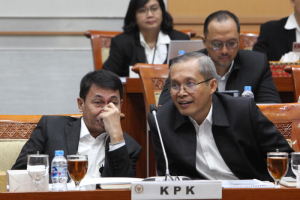


The Civil Society Coalition has raised alarm over the Draft Criminal Code Procedure (RKUHAP), warning that several provisions under discussion in the House of Representatives (DPR) pose serious threats to the independence and effectiveness of the Corruption Eradication Commission (KPK).
The coalition, which includes Indonesia Corruption Watch (ICW), Transparency International Indonesia (TII), and anti-corruption research centers from major universities, in a joint statement criticized nine key points in the draft that could significantly weaken the KPK’s authority and operations, particularly in handling high-profile corruption cases.
One of the most pressing concerns is Article 8(3) of the RKUHAP, which requires all case files − regardless of origin, including those from KPK investigators − to first be submitted to the National Police before being submitted to prosecutors.
“This creates unnecessary administrative bottlenecks and opens the door to interference in the judicial process,” the coalition said in a statement on Wednesday, July 23, 2025.
Additionally, the draft mandates coordinating investigative actions with the police, even though KPK has long held independent investigatory powers. This requirement, the coalition argues, could subject anti-corruption efforts to bureaucratic delays and potential political pressure.
Another major issue is the narrowing of authority to conduct wiretaps. The RKUHAP stipulates that wiretapping can only occur during formal investigation phase, effectively preventing the KPK from carrying out pre-investigative surveillance that has historically enabled successful sting operations. This could drastically reduce the chances of catching corrupt officials red-handed.
The draft also contains a problematic definition of “investigation” that omits the KPK’s requirement for collecting preliminary evidence at an earlier stage, reducing both the urgency and precision of early anti-corruption measures.
The permissibility of pre-trial motions to delay the main trial is another sticking point. Article 154 of the draft could allow suspects to use procedural tactics to stall their trials, delaying justice and risking the loss or destruction of evidence.
“These provisions, if passed as is, will not only undercut the operational capacity of the KPK but also send a dangerous signal that Indonesia is backtracking on its anti-corruption commitments,” Erma Nuzulia, a researcher at ICW, said.
“The current draft of RKUHAP threatens to dismantle years of anti-corruption progress by weakening KPK’s authority at almost every level − from investigation to prosecution,” she added. “If passed in its current form, it will create loopholes that benefit the corrupt and obstruct justice.”
Other red flags include:
- * Legal inconsistencies that override special corruption laws (Articles 329–330).
- * Restrictions on KPK’s ability to complete ongoing investigations using its existing
- legal framework (Article 327).
- * Limitations on forced actions (searches, travel bans) to suspects only, excluding
- witnesses or persons of interest.
- * Failure to incorporate Constitutional Court rulings allowing KPK to investigate
- military personnel in joint civil-military corruption cases.
- * Overlapping mandates between the KPK and the Witness and Victim Protection
- Agency (LPSK), potentially undermining witness safety.
The coalition is asking the House, particularly Commission III, to revisit and revise the draft, especially its articles related to corruption law enforcement.
“Corruption is a complex crime requiring a robust and independent legal framework. RKUHAP must not standardize procedures in a way that neuters specialized institutions like the KPK,” Antoni Putra of PUSaKO Unand said.
The RKUHAP deliberations have reached a critical phase. Civil society groups warn that if the draft is passed without major amendments, Indonesia risks reversing two decades of progress in anti-corruption reforms.
Tag
Already have an account? Sign In
-
Start reading
Freemium
-
Monthly Subscription
20% OFF$29.75
$37.19/MonthCancel anytime
This offer is open to all new subscribers!
Subscribe now -
Yearly Subscription
33% OFF$228.13
$340.5/YearCancel anytime
This offer is open to all new subscribers!
Subscribe now
Set up email notifications for these topics