

Pertamina Hulu Energi (PHE), the upstream subsidiary of State energy giant Pertamina, has announced its readiness to develop 12 Carbon Capture and Storage (CCS) and Carbon Capture, Utilization and Storage (CCUS) projects, with a total storage capacity of 7.3 gigatons of CO₂, targeting first carbon injection by 2030.
Edy Karyanto, PHE’s Director of Strategic Planning, Portfolio, and Commercial, unveiled the plan during a webinar titled "Unlocking the Business Potential of CCS/CCUS in Indonesia".
“We view CCS/CCUS not only as a way to meet Indonesia’s net zero emission goal by 2060 but also as a future strategic business opportunity,” he said on Tuesday, July 22, 2025.
PHE plans to engage across the full CCS/CCUS value chain − from identifying CO₂ sources, capture and purification, compression and transport, to underground storage. According to Edy, PHE has already identified major emitters in Singapore, Japan, and South Korea as potential clients for carbon storage in Indonesia.
To facilitate these projects, PHE is also developing cross-border carbon business models, including constructing international CO₂ receiving terminals to handle overseas carbon imports for injection into Indonesian storage sites.
Government support
Edy emphasized that large-scale CCS deployment demands substantial investment and policy support.
“CCS implementation is not cheap. We urge the Ministry of Finance to provide fiscal incentives, tax relief, and royalty schemes to ensure the economic viability of these projects,” he said.
He called for an enabling regulatory framework, streamlined permitting processes, and strong legal backing to accelerate progress and attract long-term investors.
Pilot project
PHE will launch a pilot CCS project at the Asri Besar Field in partnership with ExxonMobil to test geological suitability and injection potential. The company is planning 30-year contracts for CO₂ transport and storage, with options to extend for another 20 years.
Of the total storage capacity, 7 percent is allocated for domestic emitters, while up to 30 percent will be reserved for international clients, highlighting Indonesia’s ambition to become a regional CCS hub.
“This is a massive opportunity, but without multi-sector collaboration − in regulation, finance, and infrastructure − it will be difficult to compete globally,” Edy cautioned. “PHE is ready, and we are calling for concrete support from all stakeholders.”
Regional advantage
With abundant underground storage potential, cutting-edge technological preparation, and a strategic geographic position, Indonesia is poised to lead the CCS/CCUS market in Asia. The key challenge now lies not in technical capability, but in how quickly the industry and government can act in unison to seize this emerging low-carbon opportunity.
CCS/CCUS technologies are essential tools in reducing industrial emissions, offering a scalable solution for both domestic and international decarbonization efforts. Pertamina Hulu Energi’s initiative places Indonesia at the forefront of the regional carbon storage economy.
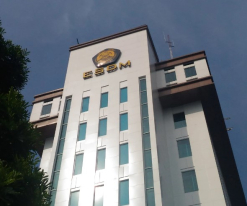
Meanwhile, Secretary General of the Ministry of Energy and Mineral Resources (ESDM), Dadan Kusdiana, emphasized that CCS and CCUS technologies are not mere add-ons but foundational pillars of the nation’s energy transition strategy.
“CCS/CCUS is not an additional technology; it is part of the foundation of our energy transition. It is crucial to our efforts to reach the net zero emission target by 2060,” Dadan told the webinar.
He highlighted that the Indonesian government has already developed a number of regulations to support the development of clean energy, including roadmaps for the power sector and the Electricity Supply Business Plan (RUPTL).
“From a regulatory standpoint, we are one of the more advanced countries. The current challenges lie in commercialization and inter-stakeholder collaboration,” he said.
Dadan also revealed that Indonesia is building a strategic partnership with Singapore for cross-border CCS implementation. Under this scheme, carbon emissions would be captured in Singapore, then transported and stored in Indonesia.
He clarified that this cooperation should not be viewed as foreign exploitation but as a strategic move to leverage national economic potential. “We must see this not as taking in foreign emissions, but as an economic opportunity. If we don’t utilize it, it will be a waste,” Dadan said.
He called for cross-sector collaboration to make CCS/CCUS a core part of Indonesia’s energy transformation. “We need to build regulatory frameworks, design incentive systems, support research, and foster multi-stakeholder cooperation. Let’s make Indonesia the CCS center of the region,” he said.
The webinar was attended by a broad range of stakeholders, including energy industry players, academics, government officials, and media representatives. Other speakers included representatives from the Ministry of Energy, SKK Migas, Bappenas, Pertamina Hulu Energi, and Carbon Aceh.
Already have an account? Sign In
-
Start reading
Freemium
-
Monthly Subscription
20% OFF$29.75
$37.19/MonthCancel anytime
This offer is open to all new subscribers!
Subscribe now -
Yearly Subscription
33% OFF$228.13
$340.5/YearCancel anytime
This offer is open to all new subscribers!
Subscribe now
Set up email notifications for these topics