

Deputy Foreign Minister Arif Havas Oegroseno has announced that Indonesia, in collaboration with relevant stakeholders, is preparing a global standard for palm oil management and trade, aimed at countering the European Union Deforestation Regulation (EUDR), which poses challenges for small-scale farmers in Indonesia − particularly those in palm oil, rubber, cocoa, and coffee sectors.
“The European Union has created its own standards without any alternative benchmark. So, we must create our own benchmark outside the EU. We need to establish national or international standards under platforms like CPOPC, BRICS, and FAO,” Arif told the Bioenergy Industry Opportunities and Challenges Seminar in Jakarta on Thursday, July 17, 2025.
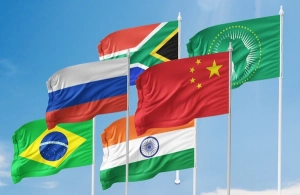
Indonesia's initiative has gained traction within the BRICS bloc, where member countries agreed to oppose the EUDR and support the creation of sustainable vegetable oil trade standards. These standards will be developed at a minilateral level and involve the Council of Palm Oil Producing Countries (CPOPC) for regional implementation and the Food and Agriculture Organization (FAO) for global-level standardization.
Arif emphasized Indonesia’s role as a leading global vegetable oil producer and exporter, saying the country must be proactive in setting its own trade standards. An initial discussion with FAO on sustainable vegetable oil trade will take place at the end of July.
“This marks a strategic shift. Indonesia will no longer just react to global rules, it will take the lead in shaping them,” he said.
The EUDR seeks to curb deforestation by ensuring that products entering the EU are not linked to deforested or degraded land. It requires detailed traceability of product origins, which has proven difficult for smallholder farmers and cooperatives in Indonesia.
Arif stressed that palm oil, cocoa, rubber, and coffee producers are particularly vulnerable, as they often lack the capacity to comply with the regulation’s stringent traceability demands.
Already have an account? Sign In
-
Start reading
Freemium
-
Monthly Subscription
20% OFF$29.75
$37.19/MonthCancel anytime
This offer is open to all new subscribers!
Subscribe now -
Yearly Subscription
33% OFF$228.13
$340.5/YearCancel anytime
This offer is open to all new subscribers!
Subscribe now
Set up email notifications for these topics