


A coalition of Indonesian civil society organizations asks the House of Representatives (DPR) to abandon the ongoing amendment of Forestry Law No. 41/1999 and instead draft an entirely new forestry law that ensures justice, protects forest ecosystems, and recognizes the rights of indigenous peoples.
The demand comes as the Indonesian parliament deliberates a revision of the decades-old law this mid-year. The coalition argues that the current legislation, rooted in colonial governance, has failed to guarantee constitutional rights, contributed to widespread forest degradation, and marginalized indigenous and local communities.
“For 26 years, the law has allowed the exploitation of forests as mere state assets, disregarding the people who depend on them,” Anggi Putra Prayoga of Forest Watch Indonesia (FWI) spoke in a press conference hosted by the Civil Society Coalition for the 2025 Forestry Bill on Tuesday, July 15, 2025 ahead of a scheduled DPR public hearing.
Forest governance crisis
The coalition − which includes the Indonesian Environmental Forum (Walhi), the Indigenous Peoples Alliance of the Archipelago (AMAN), HuMa, Greenpeace Indonesia, Madani Berkelanjutan, Kaoem Telapak, and the Women Research Institute − criticized the state for prioritizing economic interests over environmental and social concerns.
“Indonesia’s forest management has been narrowly focused on economic gain for the few, sidelining community access through customary forests and social forestry schemes,” Uli Arta Siagian of Walhi said. She noted that of the 1.5 million hectares Walhi has worked on with forest communities, only 16 percent received formal recognition in the past decade.
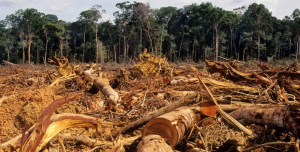
Refki Saputra of Greenpeace Indonesia added that forest destruction − both legal and illegal − has persisted under the current law, which treats forests primarily as sources of state revenue.
“This mindset must shift. We must stop monetizing forests and instead protect the 90.7 million hectares of natural forests that remain,” he said.
Refki cited data showing 42.6 million hectares of natural forest within production forest zones are at risk of deforestation. Despite a presidential instruction (Inpres) to impose a moratorium on forest clearing, deforestation and fires continue, with 39,000 hectares lost in 2024 alone in areas supposedly protected by the moratorium.
Legal reform
Erwin Dwi Kristianto of legal group HuMa stressed that a new forestry law must move away from a “management” regime to one of “stewardship,” with clear procedures to recognize customary forests and restore degraded lands.
“The state should focus on stewardship, not control,” Erwin said. “Today, even treeless lands are classified as forest areas under the law.”
Forestry scholar Dr. Eko Cahyono argued that the current framework fails to deliver social justice as envisioned by the constitution.
“Colonial-era land policies remain intact, fueling structural conflicts, environmental degradation, and the marginalization of indigenous peoples. A fundamental regulatory overhaul is urgently needed,” he said.
Gender justice and climate urgency
Sadam Afian Richwanudin of Madani Berkelanjutan emphasized that Law No. 41/1999 is outdated in light of Indonesia’s climate commitments under the Paris Agreement.
“We need stronger norms to ban all extractive industries from natural forests. Current exemptions for national strategic projects contradict our climate goals,” he said.
Sita Aripurnami of the Women Research Institute highlighted how weak legal protections have disproportionately harmed women. She cited AMAN data showing 925 indigenous community members have been criminalized for defending their lands, with women often forced to become heads of households.
“A new law must guarantee gender equality, meaningful participation of women, and mechanisms for protecting vulnerable groups,” she said, calling for affirmative policies and gender-disaggregated data.
Public participation
Patria Rizky of Kaoem Telapak called for stronger public participation in forestry governance, enabling communities to help monitor and safeguard forest integrity.
The coalition referenced Article 3 of the current law, which claims to promote people’s prosperity in a fair and sustainable way.
“This goal has clearly failed,” the statement reads, citing philosophical, sociological, and legal shortcomings.
The coalition concluded with two key recommendations: halt the fourth amendment process of the 1999 Forestry Law and initiate the drafting of a new law through a participatory process, as required by Constitutional Court Ruling No. 91/PUU-XVIII/2020, which mandates “meaningful participation” in lawmaking.
Already have an account? Sign In
-
Start reading
Freemium
-
Monthly Subscription
20% OFF$29.75
$37.19/MonthCancel anytime
This offer is open to all new subscribers!
Subscribe now -
Yearly Subscription
33% OFF$228.13
$340.5/YearCancel anytime
This offer is open to all new subscribers!
Subscribe now
Set up email notifications for these topics