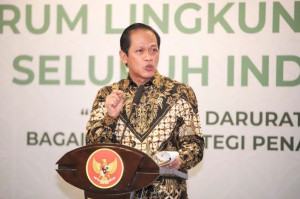



Minister of Environment, Hanif Faisol Nurofiq, has called for the immediate operation of the Refuse Derived Fuel (RDF) facility in Rorotan, North Jakarta, by July 2025, emphasizing that the plant’s infrastructure is already proven and ready for deployment.
“We’ve requested the RDF Rorotan facility to be fully operational by July. Its infrastructure is already proven,” Hanif said while inspecting Jakarta’s waste management efforts on Saturday, June 28, 2025.
The minister underscored that the facility must process only pre-sorted waste, distinguishing between organic and inorganic materials. Using mixed or unsorted waste, particularly aged refuse, is strictly prohibited, as it contradicts the plant’s design and previously triggered odor complaints from nearby residents during earlier trial runs.
Hanif added that he had spoken with Jakarta Governor Pramono Anung to ensure North Jakarta becomes a pilot project for modernized and effective waste processing.
“The governor is committed to accelerating waste handling by any means necessary,” he said.
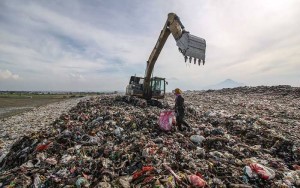
With the capital city generating an estimated 8,000 tons of waste per day, the need for robust waste management solutions has become increasingly urgent. Jakarta’s main landfill, Integrated Waste Management Site (TPST) Bantargebang, is nearing full capacity, with a towering landfill height of nearly 60 meters.
Governor Pramono had previously indicated that RDF Rorotan was not yet ready for operation due to ongoing commissioning adjustments, and that the facility would require "fresh waste" to prevent the recurrence of odor issues.
The Rorotan RDF facility was developed in response to Jakarta’s escalating waste volume. According to the city’s Regional Development Plan (RPD) 2023–2026, the RDF plant is a strategic solution aimed at reducing daily waste by 2,750 tons.
The facility employs advanced waste processing technologies, including primary and secondary shredders, dynamic screeners, and wind shifters, enabling high-precision material separation and high-quality RDF production.
Boasting a processing capacity of up to 2,500 tons per day, Rorotan will surpass even the world’s largest RDF facility in Tel Aviv, which handles 1,500 tons daily. Upon full operation, the plant is expected to produce 875 tons of RDF each day and reduce 30 percent of the waste sent to Bantargebang.
The RDF produced can serve as an alternative fuel with energy characteristics comparable to coal, supporting the energy demands of industrial manufacturing and waste-to-energy power plants (PLTSa).
Already have an account? Sign In
-
Start reading
Freemium
-
Monthly Subscription
20% OFF$29.75
$37.19/MonthCancel anytime
This offer is open to all new subscribers!
Subscribe now -
Yearly Subscription
33% OFF$228.13
$340.5/YearCancel anytime
This offer is open to all new subscribers!
Subscribe now
Set up email notifications for these topics