


Despite significant advancements in Indonesia’s electricity planning landscape, the latest Electricity Supply Business Plan (RUPTL) still falls short of aligning with the country’s climate targets, said an Environmental Law expert.
“The interesting point is that the current RUPTL was released at a time when our electricity planning landscape is more complete than ever before,” Grita Anindarini, Senior Strategist at the Indonesian Center for Environmental Law (ICEL), said during a public discussion in Jakarta on Thursday, June 26, 2025.
She compared the current planning framework to previous years, noting that earlier versions of the national electricity plan saw sporadic updates, leaving State utility company PT PLN operating in a vacuum.
“In the past, PLN walked alone because the government lacked visible planning,” she said.
Despite progress in regulatory and planning frameworks, Grita made it clear that the current RUPTL does not yet align with Indonesia’s climate commitments.
“If asked whether RUPTL is in line with climate action, my answer is: not yet. But it's also because our national planning hasn’t fully moved in that direction,” she cited.
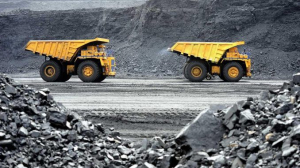
She highlighted projections showing coal usage persisting until at least 2060, albeit potentially with carbon capture and storage (CCS) solutions.
“The narrative often leads to reliance on the national electricity roadmap and energy transition strategies. But these still allow for coal,” she noted, referencing the modeling shown in PLN’s recent plans.
Furthermore, she pointed out that Indonesia’s share of renewable energy falls dramatically short of the 1.5°C pathway. While agencies like the International Energy Agency (IEA) and Climate Analytics recommend renewable shares of 57–79 percent by 2030, Indonesia’s Enhanced Nationally Determined Contribution (NDC) targets only 28 percent.
“This gap shows we are far from achieving our P2W (pathway to 1.5 degrees) target,” Grita emphasized.
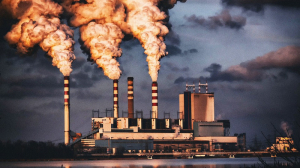
She acknowledged the removal of several controversial coal plants from the RUPTL, including the Coal fired power plant (PLTU) Jawa 3 and PLTU Indramayu units.
“These were projects heavily advocated against by civil society. If truly cancelled, they could prevent 153 million tons of CO₂ emissions,” she said.
However, she stressed that this is still insufficient. “According to studies, from 2021 to 2023 alone, 12 coal power plants should have been retired to meet climate targets. So far, none have been,” she said.
Development vs regulation
A concerning new development in the RUPTL is the emergence of PLTU (coal-fired power plant) hybrids. “There’s a 1.2 GW PLTU hybrid in Sumatra and a 200 MW one in Kalimantan. These are said to be mixed with solar PV, but PLN admits these are new coal plants,” she warned.
Grita argued that these developments exploit a loophole in Presidential Regulation 112/2022, which permits new coal projects if they are considered strategic and contribute to economic growth.
“This calls for serious scrutiny: Ae these projects truly national priorities or just backdoor ways to build new coal capacity?” she asked.
The latest RUPTL also marks the first to clearly outline nuclear power development.
“This is the first RU-Patel that formally commits to developing nuclear energy,” said Grita, noting a proposed 500 MW capacity in Kalimantan and Sumatra. “However, PLTN (nuclear power) cannot be developed in a regulatory environment that weakens environmental, social, and public participation instruments.”
She cited the long-term risks of nuclear waste, referencing Finland’s example where nuclear waste storage costs reached USD 3.4 billion. “The waste needs to be secured for hundreds of years, and future generations will bear the cost. That’s an issue of intergenerational justice,” she asserted.
Environmental concerns
Another major strategy in the RUPTL − co-firing biomass in coal plants − is also raising alarms. “PLN estimates 10.2 million tons of biomass feedstock needed by 2030,” Grita said.
But this demand has already driven 55,000 hectares of deforestation and threatens 420,000 more, according to forest watchdog FWI.
She questioned whether this practice truly counts as climate mitigation. “Our emissions accounting does not yet capture the interconnected impact between energy and forest sectors,” she explained.
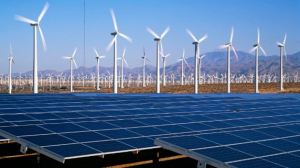
Despite bold targets, such as installing 42.6 GW of renewables by 2034, Grita revealed that actual deployment between 2021 and April 2025 reached only 1.8 GW.
She outlined systemic barriers including lack of transparent procurement mechanisms, absence of priority dispatch regulations, and insufficient risk-sharing between the government and investors.
“We need priority dispatch clauses that give renewables guaranteed access to the grid,” she said, referencing the draft Renewable Energy Bill currently under review in parliament.
In closing, Grita emphasized the urgent need for coherence between Indonesia’s climate policies and electricity planning. “Commitments in the NDC, RUKN, and RUPTL must align. And more importantly, they must be backed by credible implementation mechanisms,” she concluded.
Already have an account? Sign In
-
Start reading
Freemium
-
Monthly Subscription
20% OFF$29.75
$37.19/MonthCancel anytime
This offer is open to all new subscribers!
Subscribe now -
Yearly Subscription
33% OFF$228.13
$340.5/YearCancel anytime
This offer is open to all new subscribers!
Subscribe now
Set up email notifications for these topics