


Indonesian banks are responsible for 12 percent of all coal financing in Southeast Asia between 2016 and 2024, equivalent to US$3.96 billion, according to a new report by the Center for Energy, Ecology, and Development (CEED) and civil society partners.
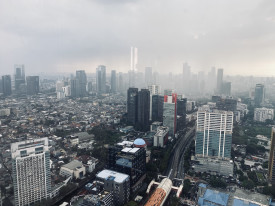
The report finds that funds largely supported coal-fired power plant projects in and around Jakarta, despite growing global efforts to cut fossil fuel investments.
The 2025 Southeast Asia Fossil Fuel Divestment Scorecard highlights that Indonesia, the Philippines, and Vietnam are the region’s biggest recipients of coal project funding, totaling US$32.48 billion over the past eight years.
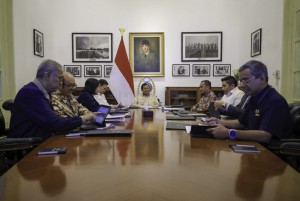
“Banks are still funding the climate crisis while underestimating its financial risks and the threat it poses to people’s lives,” Bhima Yudhistira Adhinegara, Executive Director of the Center of Economic and Law Studies (CELIOS), said in a statement on Wednesday, June 4, 2025.
“This scorecard is a tool to expose harmful financing practices, and we will continue to hold them accountable. They must change before it’s too late.” he added.
Bank Mandiri emerged as the top domestic lender for coal and gas, ranking second among all Southeast Asian and international banks. In September 2024, the state-owned bank issued a US$1.27 billion refinancing loan for the Sumsel-8 coal plant in South Sumatra. Notably, Mandiri lacks a clear coal exit policy, instead aligning with the government’s 2040 phase-out target.
State-owned peers Bank Negara Indonesia (BNI) and Bank Rakyat Indonesia (BRI) ranked seventh and eighth respectively, both criticized for their weak sustainability scores due to the absence of fossil fuel divestment commitments.
The report urges financial institutions, including Indonesian banks, to adopt measurable and time-bound phase-out strategies for coal, oil, and gas funding. It also calls for closing loopholes such as indirect financing through guarantees or securities, and ensuring subsidiaries comply with fossil-free financing policies.
“Financial institutions, both international and domestic, must stop new fossil fuel investments and shift funding toward renewable energy at the scale demanded by the climate crisis,” Gerry Arances, CEED Executive Director and Convenor of Energy Shift Southeast Asia, said. “Without immediate action, the region risks spiraling into irreversible environmental destruction and broken promises. The time to act is now.”
The 2025 Scorecard is the region’s first comprehensive assessment of 35 financial institutions’ fossil fuel policies and sustainability records. It was published by CEED in collaboration with CELIOS, WALHI, KRuHA, Energy Shift Southeast Asia, and RimbaWatch.
Already have an account? Sign In
-
Start reading
Freemium
-
Monthly Subscription
20% OFF$29.75
$37.19/MonthCancel anytime
This offer is open to all new subscribers!
Subscribe now -
Yearly Subscription
33% OFF$228.13
$340.5/YearCancel anytime
This offer is open to all new subscribers!
Subscribe now
Set up email notifications for these topics