


Indonesia’s deflation of 0.37 percent in May is not a sign of economic strength but rather a warning of weakening consumer confidence and sluggish household spending, an Economist has warned.
“Consumers are not silent because they don’t need to spend − they’re silent because they’re unsure,” Syafruddin Karimi of the Department of Economics at Padang-based Andalas University said on Wednesday, June 4, 2025.
“They doubt the stability of their income, fear of job losses, and do not yet feel financially secure.” he added.
Despite a year-on-year inflation rate of 1.6 percent and year-to-date inflation at 1.19 percent, the monthly deflation suggests that low prices and stable supply have failed to stimulate consumption. According to Karimi, this highlights deeper psychological pressures and public distrust in the economy's current trajectory.
Low consumption is feeding into a wider slowdown. As households hold back on spending, producers reduce output, delay hiring, and suspend expansion. “The consumption-production-income cycle breaks down when one link weakens,” he noted.
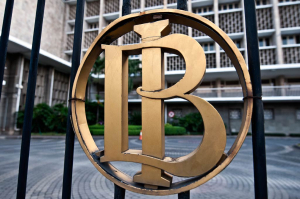
In response to economic softness, the Indonesian Central Bank (BI) has cut its benchmark interest rate three times since September 2024. While lower interest rates are meant to spur consumption and investment by reducing credit costs, Karimi emphasized that policy effectiveness hinges on public trust.
“Without confidence in their income and the future, people will continue to save rather than spend,” he said.
Karimi called on the government to act decisively, urging accelerated public spending that reaches the grassroots. “Cash transfers, energy subsidies, and labor-intensive infrastructure must be ramped up,” he stressed. “Every rupiah spent in the real economy can create demand, jobs, and restore purchasing power.”
External pressures have also mounted. Since April, Indonesia’s exports have suffered from a 10 percent U.S. tariff on its goods, particularly impacting mining and manufacturing. Karimi recommended stronger trade diplomacy and market diversification to restore export-driven growth.
He also highlighted the importance of revitalizing micro, small, and medium enterprises (MSMEs), which form the backbone of the people’s economy. These businesses need fiscal incentives, cheap financing, digital market access, and capacity-building support.
“When MSMEs recover, they absorb local labor, boost incomes, and re-ignite household consumption,” Karimi said.
Even with a 15 percent increase in rice production leading to falling food prices, consumers remain hesitant. The anticipated boost in spending has not materialized.
“Price drops alone won’t change behavior if people still feel economically insecure,” he noted.
What Indonesia needs most now, he concluded, is a restoration of public confidence through clear and consistent policies. “Deflation is not a success in controlling prices − it’s an alarm bell,” he said. “It tells us that the engine of consumption has stalled, and that people are waiting. Their silence speaks louder than inflation.”
“Reading deflation means recognizing the need for active intervention,” he added. “If the government acts swiftly and boldly, this could become a turning point toward recovery. But if ignored, we risk sinking deeper into stagnation.”
Already have an account? Sign In
-
Start reading
Freemium
-
Monthly Subscription
20% OFF$29.75
$37.19/MonthCancel anytime
This offer is open to all new subscribers!
Subscribe now -
Yearly Subscription
33% OFF$228.13
$340.5/YearCancel anytime
This offer is open to all new subscribers!
Subscribe now
Set up email notifications for these topics