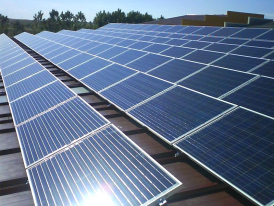



The Ministry of Public Works has announced growing investor interest in developing floating solar power plants (PLTS terapung) on two major reservoirs − Tigadihaji Dam in South Sumatra and Bintang Bano Dam in West Nusa Tenggara.
According to Rachman Arief Dienaputra, Director General of Infrastructure Financing at the Ministry of Public Works, this interest will be aligned with Indonesia’s Electricity Supply Business Plan (RUPTL) for 2025–2034.
“I don't know when the floating solar projects will be realized, but we will be reviewing potential dam projects before launching tenders,” Rachman said in Jakarta on Tuesday, June 3, 2025.
The RUPTL indicates that Tigadihaji Dam holds a solar power potential of 93.6 megawatts, while Bintang Bano Dam could generate 51.28 megawatts. Across 109 dams managed by the ministry, the total potential for floating solar power generation reaches 13.89 gigawatts—equivalent to 81.22 percent of the national solar power development target of 17.1 gigawatts set for 2025–2034.
Despite this vast potential, the current RUPTL only lists hydropower development plans for three dams − Merangin, Batanghari, and Pelosika − with no mention of floating solar installations. These hydropower projects are expected to contribute a combined 133 megawatts to Indonesia’s green energy output, broken down as follows:
● Merangin Dam Hydropower Plant: 107 MW;
● Pelosika Dam Hydropower Plant: 21 MW;
● Batanghari Mini-hydro Plant: 5 MW.
The Ministry of Energy and Mineral Resources (ESDM) has stated that the development of floating solar plants will require formal assignment to specific entities by the Ministry of Public Works to proceed.
Previously, Lilik Retno Cahyadiningsih, Director General of Water Resources at the Ministry of Public Works, shared plans to utilize two additional reservoirs for floating solar projects, with a target for operations by 2027. One of these sites is Jati Dam in West Java, which is being considered for a joint project with State electricity company PT PLN.
“It may take another two to three years before the floating solar plant becomes operational,” Lilik said on Monday, March 17, 2025.
As Indonesia continues its transition toward renewable energy, floating solar power offers a promising opportunity − especially given the country's extensive network of dams and water infrastructure.
Tag
Already have an account? Sign In
-
Start reading
Freemium
-
Monthly Subscription
20% OFF$29.75
$37.19/MonthCancel anytime
This offer is open to all new subscribers!
Subscribe now -
Yearly Subscription
33% OFF$228.13
$340.5/YearCancel anytime
This offer is open to all new subscribers!
Subscribe now
Set up email notifications for these topics