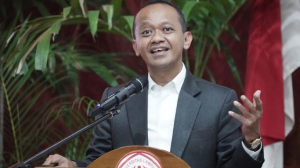



Minister of Energy and Mineral Resources (ESDM), Bahlil Lahadalia, said Indonesia will not yield to foreign pressure against its natural resource downstreaming agenda, reaffirming its commitment to self-reliance in energy and industrial transformation.
“No matter how intense the foreign pressure is, we will not retreat even an inch from our downstreaming programs,” Bahlil said while addressing the Human Capital Summit in Jakarta on Tuesday, June 3, 2025.
“Our independence was not given − it was fought for. Therefore, no country has the right to dictate our policies,” he added.
Bahlil emphasized three key national priorities: energy resilience and independence, resource downstreaming, and energy transition toward net-zero emissions. He noted that despite an array of global uncertainty − from U.S.-China trade tensions to conflicts in Ukraine and the Middle East − Indonesia must focus on its comparative advantages and strategic resources.
Bahlil highlighted the country’s significant reserves of nickel, copper, and bauxite as cornerstones for downstream industries. He cited the dramatic rise in nickel export value, from US$3.3 billion in 2017 to US$34 billion in 2023, following Indonesia’s ban on raw ore exports and push to build smelters.
“Indonesia holds 43 percent of the world’s nickel reserves. That’s why foreign NGOs are attacking our policies − they know how critical our resources are,” he said.
He also pointed to the nation’s plans to build an end-to-end electric vehicle battery ecosystem, from mining to cell production, with a groundbreaking investment worth US$6–7 billion scheduled this June. “This will be the world’s first full-cycle EV battery project,” Bahlil said.
On renewable energy, the ESDM minister revealed that 71 percent of Indonesia’s new power development plan (RUPTL) up to 2030 will focus on renewables, totaling 69.5 GW. However, he also defended the continued use of coal under certain conditions.
“Don’t ask me again when coal will be retired,” Bahlil remarked. “We’re open to phasing it out, as long as cheap financing and technology are made available. Otherwise, the burden on our people will be too great.”
Finally, Bahlil asked academic institutions to align their curricula with emerging industry demands, especially as the ministry estimates that 6.2 million new energy-related jobs will be needed by 2030.
Already have an account? Sign In
-
Start reading
Freemium
-
Monthly Subscription
20% OFF$29.75
$37.19/MonthCancel anytime
This offer is open to all new subscribers!
Subscribe now -
Yearly Subscription
33% OFF$228.13
$340.5/YearCancel anytime
This offer is open to all new subscribers!
Subscribe now
Set up email notifications for these topics