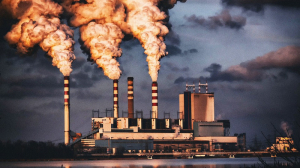



The Centre for Research on Energy and Clean Air (CREA) has revealed that biomass co-firing at coal-fired power plants (PLTU) in Indonesia brings only marginal reductions in emissions and could, in fact, introduce new pollutants.
According to CREA’s latest report, “Biomass Co-firing in Indonesia: Prolonging, not solving coal problem”, the initiative cuts emissions by only 1.5–2.4 percent, raising questions over its effectiveness as a national energy transition strategy.
Under Indonesia’s Electricity Supply Business Plan (RUPTL) 2021–2023, the government plans to implement 10 percent biomass co-firing at 52 PLTUs. However, the CREA report finds this would only reduce particulate matter by 9 percent, nitrogen oxides (NOx) by 7 percent, and sulfur dioxide (SO₂) by 10 percent. Worse, it could increase unregulated emissions such as mercury, carbon monoxide (CO), hydrogen sulfide (H₂S), and trace heavy metals like arsenic (As) and lead (Pb).
"Claims around biomass co-firing as an emission-reduction solution must be re-evaluated," Katherine Hasan, CREA analyst, said as quoted in a statement on Friday, May 30, 2025.
"Air quality improvements will only begin with a clear roadmap to retire all coal plants in Indonesia and by enforcing strict emission standards requiring advanced pollution control technologies," she added.
CREA also criticized the lack of comprehensive lifecycle emission accounting, noting that the current claims do not factor in emissions from biomass harvesting, processing, and transportation. Financially, PLN’s biomass procurement policies limit suppliers to low-cost, low-calorific materials such as sawdust, rice husks, and refuse-derived fuel (RDF), which are inefficient and environmentally questionable.
“Stakeholders are promoting biomass co-firing as a fossil fuel emission reduction measure, rather than addressing the root causes of air pollution or accelerating renewable energy deployment,” Abdul Baits Swastika, CREA researcher, said.
The report calls for transparency and accountability in biomass use, including independent emission verification and regular monitoring. CREA urges the government to shift focus from co-firing to renewable energy development, emphasizing that Indonesia’s diverse biomass resources are better suited for dedicated bioenergy generation.
“After years of promoting co-firing, there’s still no clear path for sustainable biomass supply, especially with rising global skepticism. South Korea’s move to cut biomass subsidies is a sign of weakening international support,” Putra Adhiguna, Managing Director of Energy Shift Institute, warned
Meanwhile, Fiorentina Refani of CELIOS further highlighted the environmental risks, citing the expansion of energy plantation forests (HTE) as a major threat.
“HTE programs may sacrifice natural forests for large-scale biomass supply, undermining sustainability narratives and proving that biomass co-firing is largely a myth,” she said.
Already have an account? Sign In
-
Start reading
Freemium
-
Monthly Subscription
20% OFF$29.75
$37.19/MonthCancel anytime
This offer is open to all new subscribers!
Subscribe now -
Yearly Subscription
33% OFF$228.13
$340.5/YearCancel anytime
This offer is open to all new subscribers!
Subscribe now
Set up email notifications for these topics