

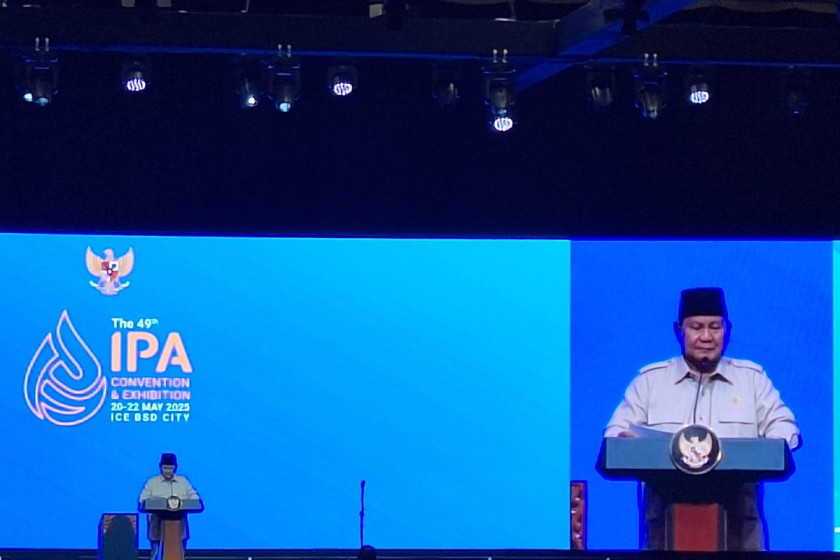
IPA CONVEX - image source: Kompas.com/Rahel
The Indonesian government has reaffirmed its strong support for state owned gas distribution company PT Perusahaan Gas Negara (PGN) in its mission to provide reliable and sustainable natural gas across the country.
This was marked by the signing of several Gas Sales and Purchase Agreements (PJBGs) and a strategic cooperation during the Indonesian Petroleum Association Convention & Exhibition (IPA Convex) 2025.
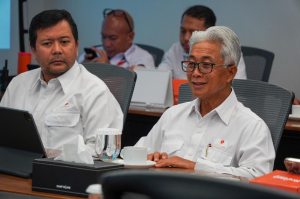
Represented by Commercial Director Ratih Esti Prihatini, PGN signed multiple PJBGs to ensure secure gas supply for domestic customers, while complying with regulations set by the Ministry of Energy and Mineral Resources (ESDM). The agreements include:
1. PJBG for household gas (jargas) with PGE for 0.9 BBTUD
2. PJBG with Pertamina EP West Java for 12–17 BBTUD (ramp up)
3. PJBG with MBGI for 0.35 BBTUD
4. PJBG with PHE Ogan Komering for 3.99 BBTUD
5. Amendment to PJBG with PHE North Sumatera Offshore for 8.48 BBTUD
6. Amendment to PJBG with Pertamina EP Medan for 4.5–11 BBTUD
In addition, PGN signed a Heads of Agreement (HOA) with Petronas Bukit Panjang to explore a potential gas supply of up to 31 BBTUD. This strategic initiative opens new avenues for PGN to diversify its gas sourcing while adhering to government allocation policies.
“These agreements are of strategic importance to ensure the continuity of domestic gas utilization. PGN remains committed to fulfilling national energy needs and supporting the government's agenda to drive economic growth,” Ratih said as quoted in a statement on Tuesday, May 20, 2025.
She also expressed gratitude to the Ministry of Energy and Mineral Resources, Upstream Oil and Gas Regulatory Task Force (SKK Migas), Downstream Oil and Gas Regulatory Agency (BPH Migas), and other government agencies for their integrated efforts in managing energy mix development.
Ratih emphasized the importance of collaboration among stakeholders, including state-owned energy enterprises and private sector players.
“All stakeholders must continue to cooperate and perform their respective roles effectively,” she concluded.
Tag
Already have an account? Sign In
-
Start reading
Freemium
-
Monthly Subscription
20% OFF$29.75
$37.19/MonthCancel anytime
This offer is open to all new subscribers!
Subscribe now -
Yearly Subscription
33% OFF$228.13
$340.5/YearCancel anytime
This offer is open to all new subscribers!
Subscribe now
Set up email notifications for these topics