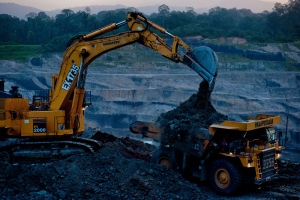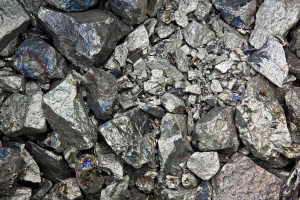


Indonesia’s nickel industry is preparing to introduce national and international standardizations in environmental, social, and governance (ESG) practices, aimed at safeguarding the country’s mineral downstreaming policy and ensuring responsible resource management amidst mounting international criticism and environmental scrutiny.
“This standardization will be similar to the RSPO (Roundtable on Sustainable Palm Oil) or ISPO (Indonesian Sustainable Palm Oil) in the palm oil sector, or the SVLK (Timber Legality Verification System) system used in the timber industry,” Meidy Katrin Lengkey, Secretary General of the Indonesian Nickel Miners Association (APNI), said as quoted by Antara, on Tuesday, May 20, 2025.
To develop the standards, APNI plans to host a high-level discussion forum early next month in Indonesia, bringing together representatives from 30 mineral-producing countries. The forum aims to establish a globally recognized ESG certification tailored to the mining sector.
“We’ve asked the Foreign Ministry to assist in inviting embassies from mineral-rich countries − not just for nickel but for other critical minerals too. We want to replicate the palm oil model and build our own version of RSPO or ISPO for mining,” Meidy cited.
Indonesia has 27 critical minerals and 22 strategic minerals, Meidy added, emphasizing that a proper ESG framework is essential to prevent further negative campaigns that have targeted the nickel industry in recent years.
ESG weaponization
Meanwhile, Muhammad Toha, Head of Strategic Mineral and Downstream Policy at the Indonesian Mining Experts Association (Perhapi), pointed out that ESG concerns are frequently used as a political tool to pressure Indonesia into halting its mineral downstreaming policies.
“We support making the industry greener and more environmentally responsible. But ESG should not be used as a hidden agenda to obstruct industrialization in countries like ours,” Toha said on Tuesday, May 20, 2025.
He emphasized that stakeholders in the nickel sector are aligned in their commitment to sustainability. “The entire industry wants to ensure that mining and processing activities are environmentally and socially responsible,” he cited.
Toha noted that criticism ramped up after Indonesia transformed from a raw nickel exporter to a processed nickel producer in 2015. Despite ongoing challenges, he urged the government not to retreat from downstreaming efforts, highlighting its role in boosting state revenues and job creation.
Stricter oversight, positive incentives
Hendra Sinadia, Executive Director of the Indonesia Mining Association (IMA), said the industry faces image problems largely because of non-compliant companies. “In reality, it’s the compliant, long-term focused companies that suffer from the bad reputation,” he said, also on Tuesday.
To address this, IMA is proposing a reward system for companies that meet ESG standards and contribute positively to the mining sector.
“Incentives could include easier business processes. Right now, compliant and non-compliant firms face the same bureaucratic hurdles when applying for work plans (RKAB),” Hendra noted.
He also defended the presence of major multinational players such as Harita Nickel and Vale Indonesia, highlighting their commitment to high operational standards despite persistent negative narratives from some NGOs.
Tag
Already have an account? Sign In
-
Start reading
Freemium
-
Monthly Subscription
20% OFF$29.75
$37.19/MonthCancel anytime
This offer is open to all new subscribers!
Subscribe now -
Yearly Subscription
33% OFF$228.13
$340.5/YearCancel anytime
This offer is open to all new subscribers!
Subscribe now
Set up email notifications for these topics