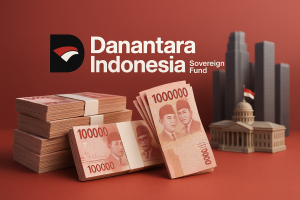


The government has announced a comprehensive plan to restructure and consolidate State-Owned Enterprises (SOEs) and their subsidiaries from the current total of 888 companies to be reduced to just 200 over the next few years, aimed at boosting efficiency and global competitiveness.
Deputy Minister of SOEs, Dony Oskaria, said that this restructuring process is essential to optimize the performance of state-owned companies. The plan will be implemented in four key stages.
The first stage involves a fundamental business review of all SOEs. This includes strategic evaluations such as business reprofiling and potential turnarounds.
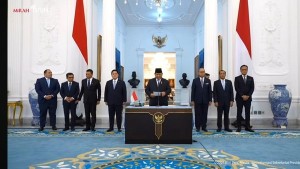
“Some businesses may be closed, depending on the results of our fundamental business review. This is the first stage we are currently working on, and we hope to complete it by October this year. One by one, we will release a matrix of our companies,” Dony said during the House of Representatives (DPR) Economic Outlook event on Tuesday, May 20, 2025.
The event was presented by the House’s Commission XI in collaboration with detikcom and supported by the Indonesia Deposit Insurance Corporation (LPS), Bank Rakyat Indonesia (BRI), BTN, Bank Indonesia, the Financial Services Authority (OJK), State electricity company PT PLN, and State telecommunication company Telkom Indonesia.
The second stage focuses on business consolidation. Dony noted that this phase is expected to take one to two years and will involve more than 350 mergers and acquisitions, creating companies with significantly larger operational scales.
“There will be more than 350 mergers and acquisitions, so we’ll end up with larger companies. With this scale, we will have stronger competitive capabilities,” he added.
Following this consolidation, the number of SOEs is expected to drop dramatically − from 888 to approximately 200. These new entities will operate on a larger scale and possess enhanced competitiveness.
“From 888 companies, we aim to bring the number down to around 200 that are large-scale and highly competitive. This way, our holding operations will consist of healthy, strong companies capable of competing effectively,” Dony said.
The third stage will involve rewriting the roadmaps for each company, including setting Key Performance Indicators (KPIs), reviewing business models, defining revenue streams, and establishing relevant metrics.
In the fourth and final stage, the focus will shift to identifying the value creation potential of each company, including decisions on privatization or continued state ownership.
“These stages won’t be completed in just one or two years. But within four years, we aim to reach the final stage, determining which companies will be privatized and which will remain as standalone enterprises. This process will lead to greater efficiency in managing our SOEs,” Dony concluded.
Already have an account? Sign In
-
Start reading
Freemium
-
Monthly Subscription
20% OFF$29.75
$37.19/MonthCancel anytime
This offer is open to all new subscribers!
Subscribe now -
Yearly Subscription
33% OFF$228.13
$340.5/YearCancel anytime
This offer is open to all new subscribers!
Subscribe now
Set up email notifications for these topics